Ten years of designing bridal bouquets in this city taught us something that most flower shops never figure out. The bouquet isn’t decoration. It’s the single floral element that lives in your hands for the entire day, shows up in 80% of your photographs, and gets more physical wear than any centerpiece or altar arrangement ever will. Getting it right takes a level of attention that goes beyond picking nice flowers and tying them with ribbon.
Think about how many times you’ll set your bouquet down and pick it back up on your wedding day. First look photos. Ceremony. Portraits in Central Park or along the High Line. Cocktail hour when someone grabs you for a hug. The grand entrance. Toasts. Maybe a bouquet toss later in the night. That’s eight, nine, ten hours of handling – and the flowers need to hold up through all of it without browning at the edges or falling apart in your grip.
Our studio on West 56th Street in Midtown handles this problem the same way we handle everything else. With obsessive prep work. We condition every stem individually the day before, hydrate aggressively, and build the internal structure of each bouquet so it can take a beating and still photograph like it was just finished five minutes ago.
This catches some brides off guard during the initial meeting, but there’s a real reason behind it. The shape of your gown changes which bouquet silhouette looks right in a full-length photo. A voluminous tulle ballgown with a sweetheart neckline wants a different proportional relationship to the bouquet than a fitted crepe column dress does.
Neckline height shifts where the eye goes. Fabric sheen affects how colors read next to each other. A cathedral train means the bouquet gets photographed from farther away, so scale matters more. None of this is stuff you’d naturally think about while dress shopping, and that’s fine. But it’s stuff we think about constantly, because we’ve seen hundreds of pairings work and hundreds that didn’t quite land – and the difference almost always traces back to proportion.
Our studio sits close enough to the NYC wholesale flower market that we walk there. Not drive. Walk. Multiple mornings each week, sometimes before sunrise when the best shipments hit the floor. That access is a genuine competitive advantage and it’s one of the main reasons brides in Manhattan, Brooklyn, and Queens end up choosing us.
When a grower in Ecuador ships high-altitude garden roses that only a handful of vendors receive, we know about it that morning. When Dutch auction tulips arrive in an unusual colorway mid-February, we grab them before noon. You can’t get that kind of selection from a catalog or a delivery service. You get it by showing up in person and knowing the vendors by first name.
Peonies are the single most requested bloom for bridal bouquets in New York. They’re available locally from roughly late April through early June. Outside that window, they’re imported from Alaska, Chile, or the Netherlands – and the cost jumps significantly. We’d rather tell you that upfront than build a proposal with artificially low numbers and surprise you later.
Ranunculus peak in late winter and early spring. Dahlias are a late summer and fall flower. Garden roses are more flexible but still fluctuate in price week to week. Part of our job during the planning phase is walking you through what’s going to be abundant and gorgeous during your specific wedding month versus what’s technically available but will eat a disproportionate chunk of your budget. Sometimes a swap you’d never have considered on your own ends up looking even better than the original idea.
We cut, feed, and cool every stem in a multi-step process before it touches an arrangement. Your bouquet peaks on your wedding morning – not the Thursday before.
One business day response time, always. In the final stretch before the wedding, your designer is reachable by text for anything that comes up.
Garden-gathered and organic is probably the most popular bouquet style in NYC right now. Loose, airy, like someone wandered through a meadow and came back with the perfect armful. We build a lot of those and genuinely enjoy them because every single one turns out differently depending on what blooms are available that week.
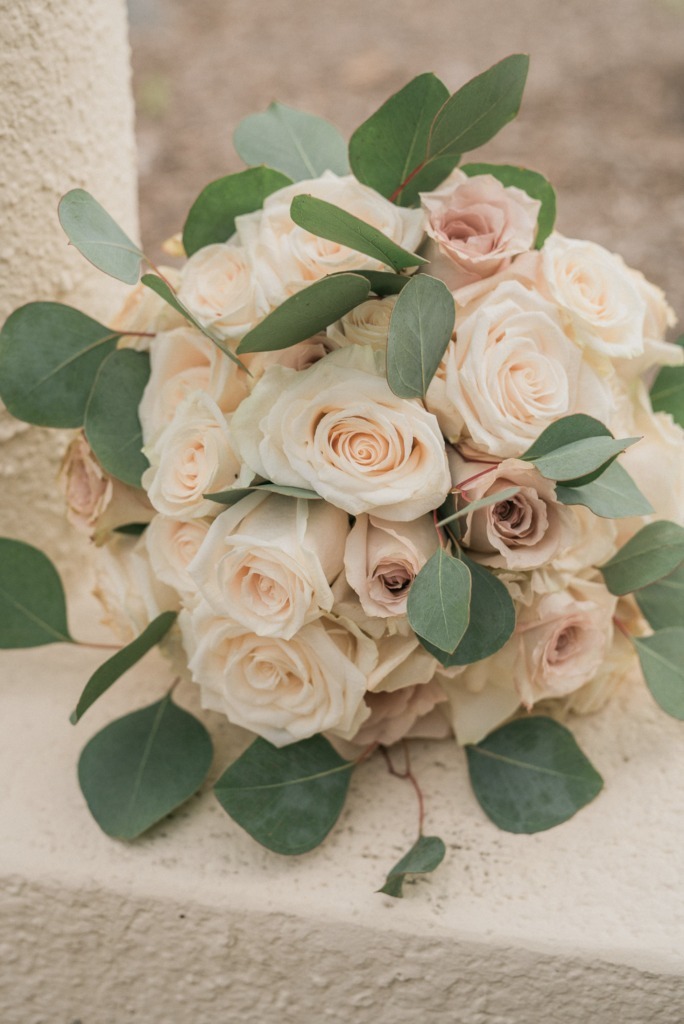
Tight and rounded still has a devoted following, especially with brides going for a classic, structured aesthetic. Cascading bouquets are making a comeback in a big way – long trailing shapes that drape well below the hands, heavy on texture and movement. We’ve also done single-stem presentations for courthouse weddings at City Hall and minimal nosegays for elopements in Prospect Park. There’s no house style we push on anyone. We figure out what belongs in your hands on your particular day and we build that.
The bouquet shows up in a custom box, hydrated and protected, delivered wherever you’re getting ready. Hotel in Midtown? We know the service entrances at The Plaza, The Pierre, The Lotte, and about two dozen others. Brownstone in Park Slope? We’ll confirm the buzzer code and a contact person the week before so the handoff takes thirty seconds and doesn’t interrupt hair and makeup.
Timing is something we’ve dialed in over the years. Flowers arrive after the makeup artist has started but well before your photographer begins shooting detail flats. Early enough to photograph the bouquet next to the rings on a windowsill. Late enough that the stems haven’t been sitting in a warm room losing moisture for three hours.
A bouquet that looks perfect on a design table in an air-conditioned studio means nothing if it can’t handle real conditions. July in New York is brutal on flowers. January wind outside a church entrance is brutal in a different way. Rain during outdoor portraits at the Brooklyn Botanic Garden – that’s happened to us more than once.
So we choose hardy varieties for the structural base. Garden roses over hybrid teas. Lisianthus when we need something that reads soft but holds its shape in humidity. Greenery that won’t go crispy at the tips after a few hours in warm air. The delicate, statement-making blooms still make an appearance – but they’re supported by a framework of stems that can take the abuse of an actual twelve-hour event.
What you pay for a bridal bouquet depends on three things. Size, bloom selection, and structural complexity. A compact hand-tied with seasonal flowers in a tonal palette is a different price point than a large cascading arrangement with imported dahlias, wired orchid stems, and trailing amaranthus.
Both are worth the investment. But the labor behind each one is genuinely different, and we think you should see that reflected clearly in the numbers. Our proposals list the bouquet as its own line item – separate from ceremony florals, separate from centerpieces, separate from everything else. If you want to shift dollars from one category to another after reviewing the breakdown, we rework it together until the whole plan sits comfortably within your budget.
Call us at (929) 833-8990 or fill out the form on this page. We’ll reach out within a day to talk about your wedding date, your venue, colors you’re drawn to, and any Pinterest or Instagram images you’ve been saving. From there we schedule a design session – in person at our Midtown studio or over video if that works better for your schedule.
Most brides finalize their bouquet plan within two meetings. If you’re someone who wants to hold a physical mockup before locking everything in, we can set that up too. The whole process is built around making sure you feel completely confident in what you’ll be carrying when you walk down that aisle.
Some florists treat the bouquet like an afterthought – assemble it fast the morning of the wedding, wrap it, box it, move on to the bigger-ticket installations. Our studio operates the opposite way. The bouquet is the most intimate floral piece of the entire wedding. You’re physically holding it against your body for hours. It’s framed in every close-up portrait. Guests see it up close during the ceremony and at the head table.
That kind of proximity demands precision. Color values that look right against your skin tone. Textures that complement your fabric, not clash with it. A handle wrapped at exactly the right height for your natural arm position. These details are small individually but they add up to a bouquet that feels genuinely yours – and photographs that way decades from now.
Plan for it now, not the morning after. If you already know you want your bouquet pressed, dried, or set in resin, telling us during the design phase lets us make smarter bloom choices. Certain flowers hold up through preservation far better than others. Garden roses, ranunculus, and anemones tend to keep their shape and color well. Hydrangeas and some tropical varieties lose a lot in the process.
We work with a handful of preservation specialists across the city and can connect you with someone we trust. A quick conversation early on saves you from falling in love with a bloom that looks stunning on your wedding day but turns into a brown disc two weeks later in a pressing frame.
Referrals built this business. Brides who loved their bouquet told their engaged friends, those friends called us, and the cycle kept going. The reviews on our site come from real couples with real wedding photos – not stock imagery.
One person handles your consultation, your sourcing, your build, and your delivery. Not a team of rotating strangers. One designer who remembers what you said about hating baby’s breath during your very first phone call.
Being a regular at the NYC wholesale market means preferred access to limited inventory, better pricing on bulk orders, and first dibs on rare seasonal shipments.
We over-order key stems as insurance and bring a repair kit to every delivery. If a petal bruises in transit, it gets swapped before you ever see it.
The sooner we hear from you, the better positioned we are to lock in seasonal bloom availability and reserve your wedding date on our calendar. Call or fill out the form below – we respond fast and we never pressure you into booking before you’re ready.