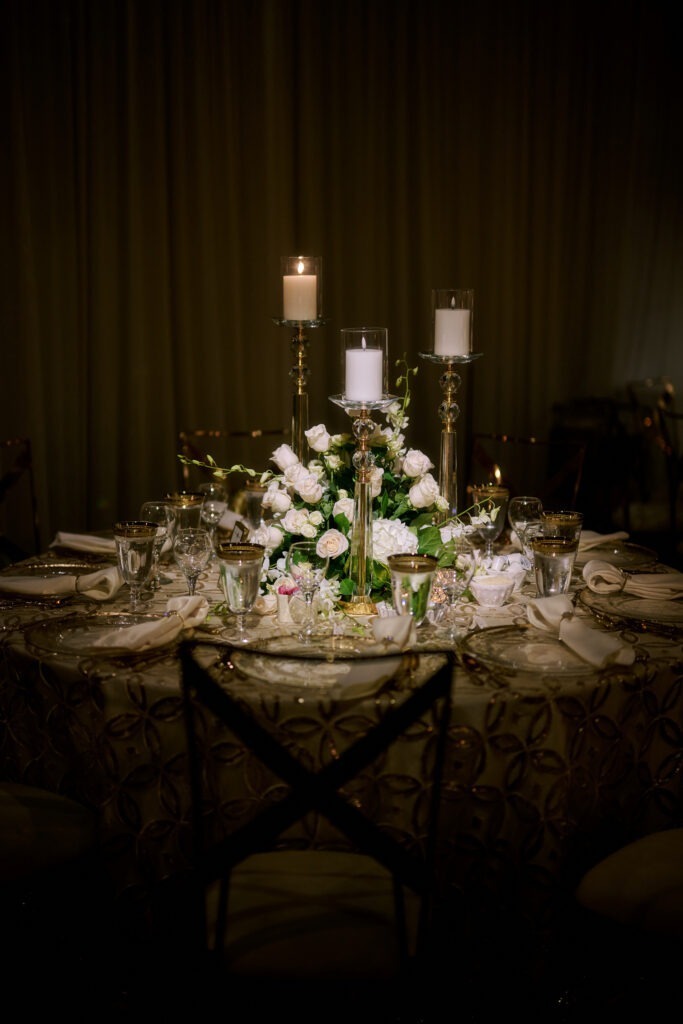
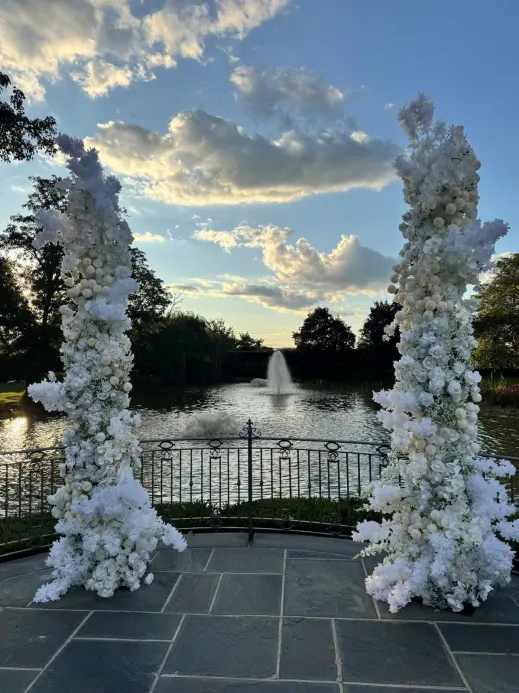
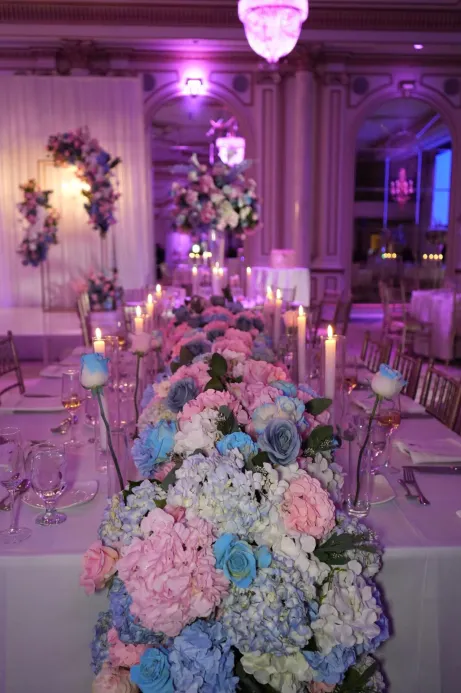
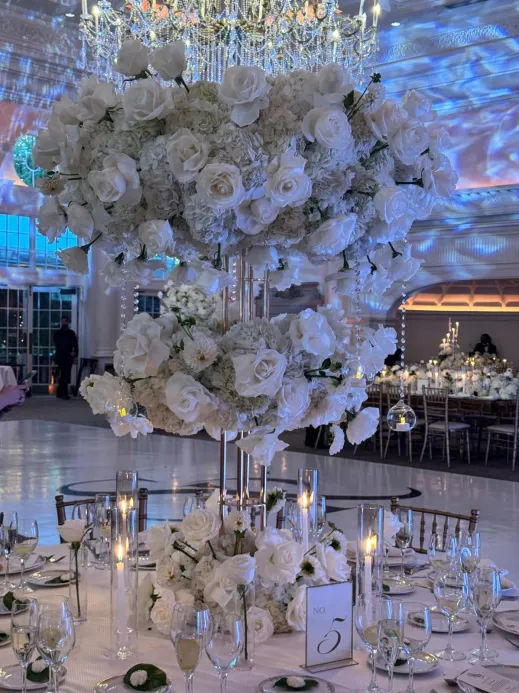
That walk takes about sixty seconds. Sixty seconds from the back of the room to the person you’re about to marry. And here’s the part that messes with people’s heads a little – those sixty seconds produce more photos than the entire cocktail hour. Your photographer is shooting nonstop. Your videographer has a second angle rolling. Every guest with a phone is recording. Whatever lines that path shows up in all of it. We’ve spent years obsessing over what goes on the ground, on the chairs, and in the air along that stretch of floor – because sixty seconds of footage lives forever and the flowers framing it better be worth rewatching.
Sounds weird to say out loud, but the first question we ask about aisle florals has nothing to do with flowers. It’s about the floor. Marble in a Midtown hotel ballroom reflects light upward and makes low arrangements glow. Hardwood at a Brooklyn loft absorbs light and needs arrangements with more visual weight to avoid getting swallowed. Grass at an outdoor ceremony in Staten Island means stems sit at a slightly uneven grade and the vessels need to be stable enough to not tip when someone’s heel sinks into the turf nearby.
Stone, tile, carpet, wood, grass, concrete. We’ve put flowers on all of them across this city. The material underneath changes which vessels work, how tall the arrangements should be, and whether scattered petals are even practical. Petals on marble look gorgeous. Petals on dark carpet disappear. Petals on grass get damp and stick to shoes. You’d never think about any of this. That’s our job.
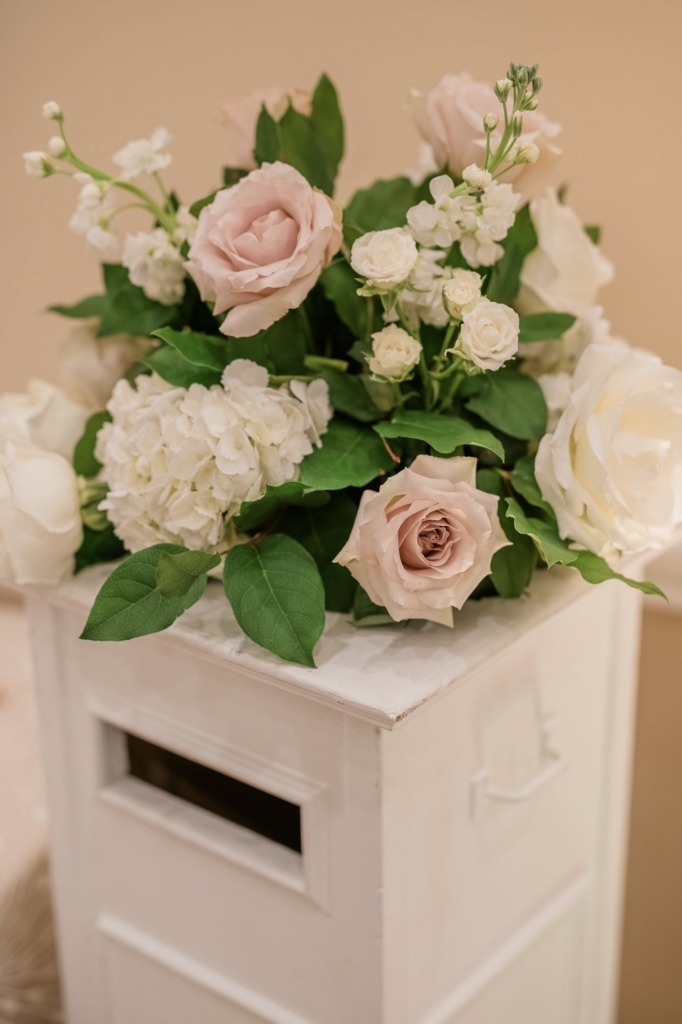
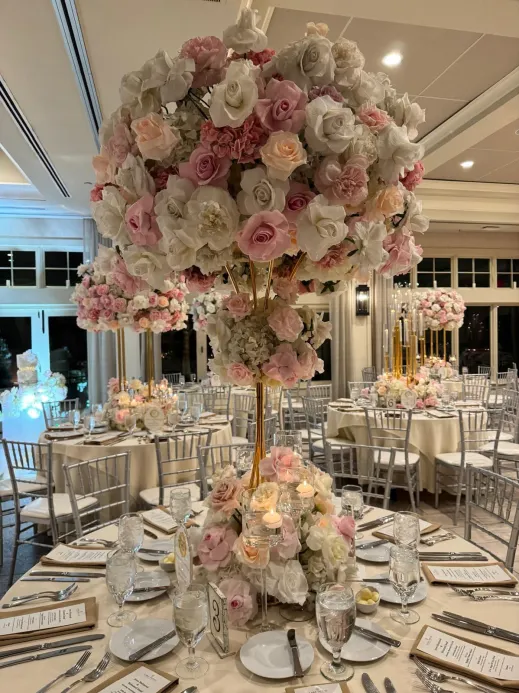
Clusters of flowers at the base of every few chairs – this is probably the most popular aisle treatment we do. Low vessels or no vessels at all, just gathered stems sitting at floor level, spilling slightly into the aisle without blocking the walking path. Gives you a garden corridor effect where the bride moves through flowers rather than just past them.
Spacing matters and we’ve tested a lot of variations over the years. Every single chair gets expensive fast and honestly looks cluttered. Every other chair still feels dense in a good way. Every third chair hits a sweet spot between visual rhythm and budget for most of our couples. Every fourth starts to thin out and only works in shorter aisles where the total number of arrangements still adds up to something impactful.
We bring the arrangements to the venue pre-built and place them during setup. Each one is weighted at the base or sits in a vessel heavy enough to stay put when a flower girl stomps past or a groomsman’s shoe clips the edge during the processional. Sounds like paranoia. It’s experience.
Rose petals scattered along the aisle runner is one of the oldest moves in wedding floral playbooks and it still works. There’s a reason it survived every trend cycle of the last thirty years. Something about walking on a path of petals shifts the emotional register of the moment. The bride feels it underfoot. Guests see it from their seats. The photographer captures it as texture in the wide shot.
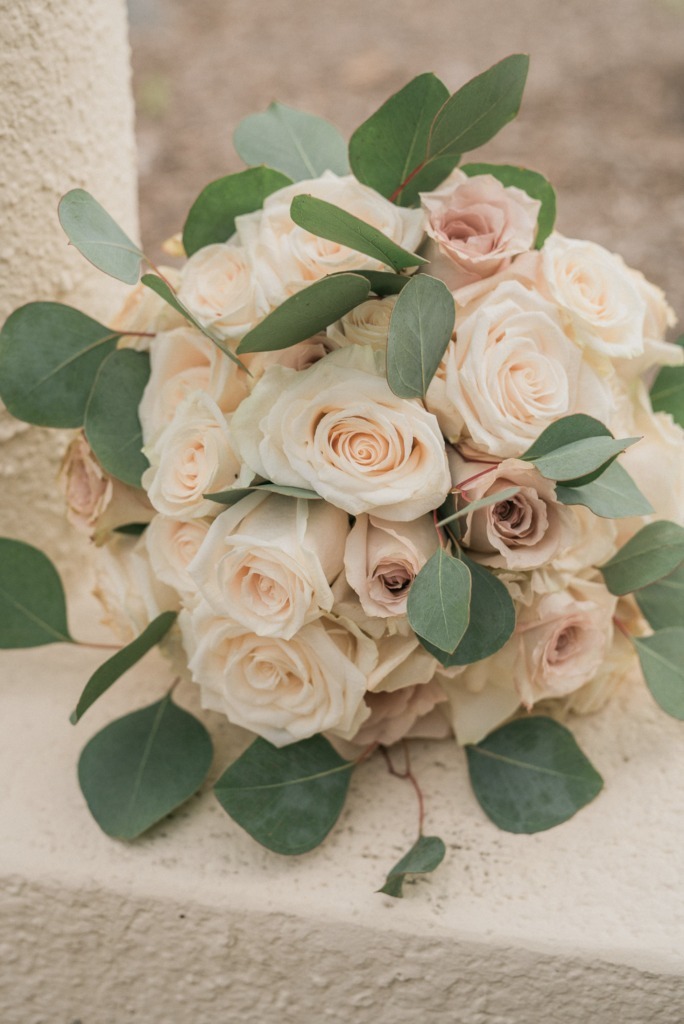
We use fresh petals pulled from whole roses at our studio – not the freeze-dried packets that feel papery and look faded before the ceremony even starts. Color matching is critical. If your aisle arrangements are ivory and blush, throwing random red petals on the ground because “roses are romantic” creates a disconnect that’ll bug you in every photo. We match the petal tones to the broader palette and scatter in a density that reads as intentional, not like someone accidentally dropped a bucket on the way to the altar.
Quick practical note. Some venues don’t allow loose petals. Fire codes, cleanup policies, historic preservation rules at certain churches – ask your venue coordinator before we plan this element. We check too, but hearing it from you first saves everybody time.
A 40-foot aisle at a cathedral and a 15-foot aisle at a restaurant ceremony need completely different floral density. We calculate placement based on actual walking distance.
Indoor humidity, outdoor wind, foot traffic from the bridal party – every aisle arrangement is conditioned and weighted for what’s actually going to happen around it.
Pew ends at churches. Chair backs at hotel ceremonies. Shepherd’s hook hangings at outdoor setups. These vertical accents are the aisle design elements that show up in side-angle photos and in the footage your videographer captures while the bridal party walks.
For traditional church ceremonies – St. Ignatius Loyola, St. Patrick’s Old Cathedral, Marble Collegiate – we do pew-end pieces that attach with ribbon wraps or padded clips. Nothing that scratches wood or leaves marks. Most churches in Manhattan are very specific about this and we’ve been told off by enough sacristans to know exactly what flies and what doesn’t. The arrangements are small but purposeful. A focal bloom or two with greenery that trails slightly downward. Enough to create a visual beat along the aisle without turning the sanctuary into something that looks like a garden center exploded.
For Chiavari chairs at hotel and loft ceremonies, we use a clip system that hooks onto the chair back without slipping. Every venue in NYC seems to own a different version of the Chiavari and they all have slightly different back rail widths. We’ve jerry-rigged attachment solutions for every variation at this point. For folding chairs at casual outdoor ceremonies – honestly the hardest chairs to attach anything to – we use a combination of ribbon ties and small wire hooks that grip the metal frame.
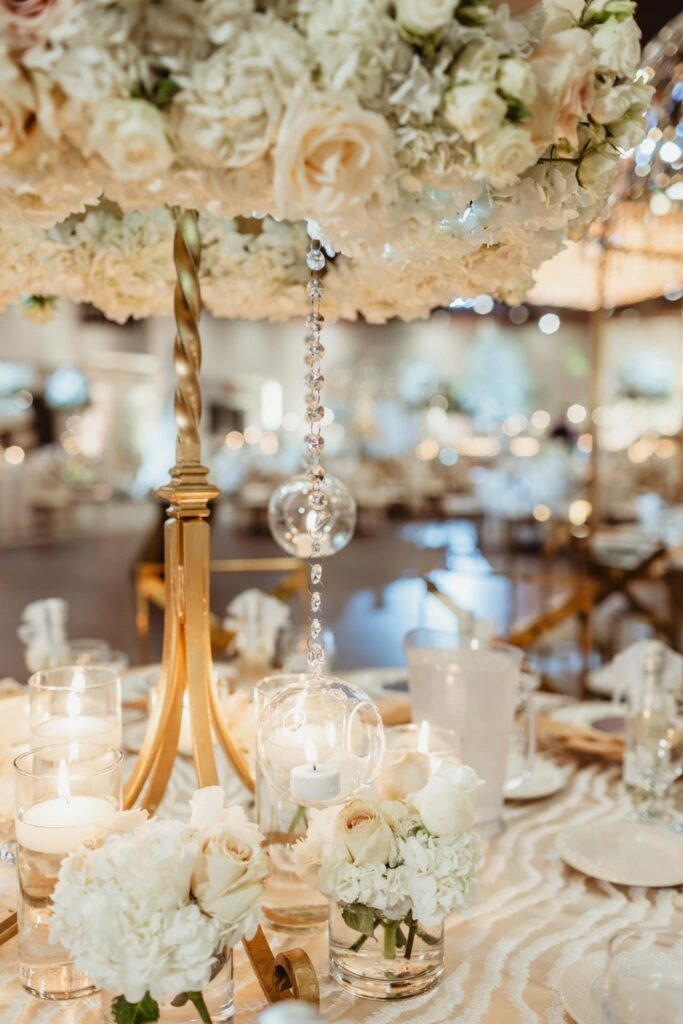
Floating flowers above the aisle path is a newer trend that’s picked up serious traction in NYC over the past couple of seasons. Suspended blooms on monofilament line, small floral clouds at intervals over the walkway, a continuous garland draped overhead between the chair rows. All of it photographs from an angle that ground-level arrangements can’t touch.
Fair warning though. Overhead aisle installations take more setup time and more coordination with the venue than anything at floor level. Ceiling attachment points need to be identified and approved. The hanging height has to clear the tallest person in the bridal party plus the bride’s updo plus any headpiece or veil with vertical volume. We measure all of this during the planning phase because discovering a clearance issue at 3 PM on the wedding day is not a problem with a good solution.
At venues with exposed beams or industrial ceilings – Greenpoint Loft, The Foundry before it closed, various warehouse spaces in Red Hook and Gowanus – overhead aisle work is relatively straightforward. At hotels with finished plaster ceilings, it gets trickier and sometimes isn’t possible without a freestanding truss system, which adds cost and footprint.
Lanterns lining the aisle – glass hurricanes, metal lanterns, paper lanterns at outdoor ceremonies – are technically not a floral element. But they intersect with the floral design so directly that we always discuss them together.
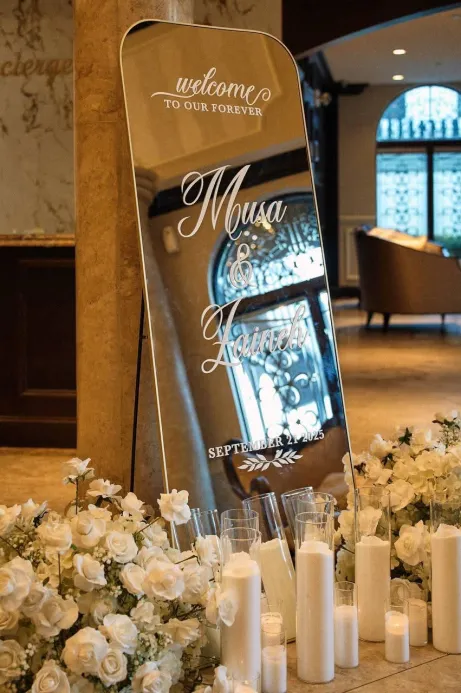
A lantern sitting alone on the ground next to a chair leg looks fine. A lantern nestled into a small cluster of greenery and blooms at the base of a chair looks like a scene from a movie. The flowers soften the hardware and the candlelight warms the petals. We’ve done this combination at evening ceremonies in Midtown hotels where the aisle looked like a path through an enchanted garden because the lantern light caught the flower arrangements from below and threw soft shadows up the chair legs.
Battery-operated candles versus real flame depends entirely on venue policy. Most Manhattan event spaces require flameless. Churches vary. Outdoor venues are usually more flexible. We design around whatever the fire code demands and honestly, the LED candles available now are convincing enough that most guests can’t tell the difference from their seats.
Some couples walk in with a thick folder of magazine clippings and a very specific vision. Others show up and say something like “earthy but elegant” and leave the rest to us. Both are fine. We’ve started from both places hundreds of times and the end result always feels personal because we ask the right questions early.
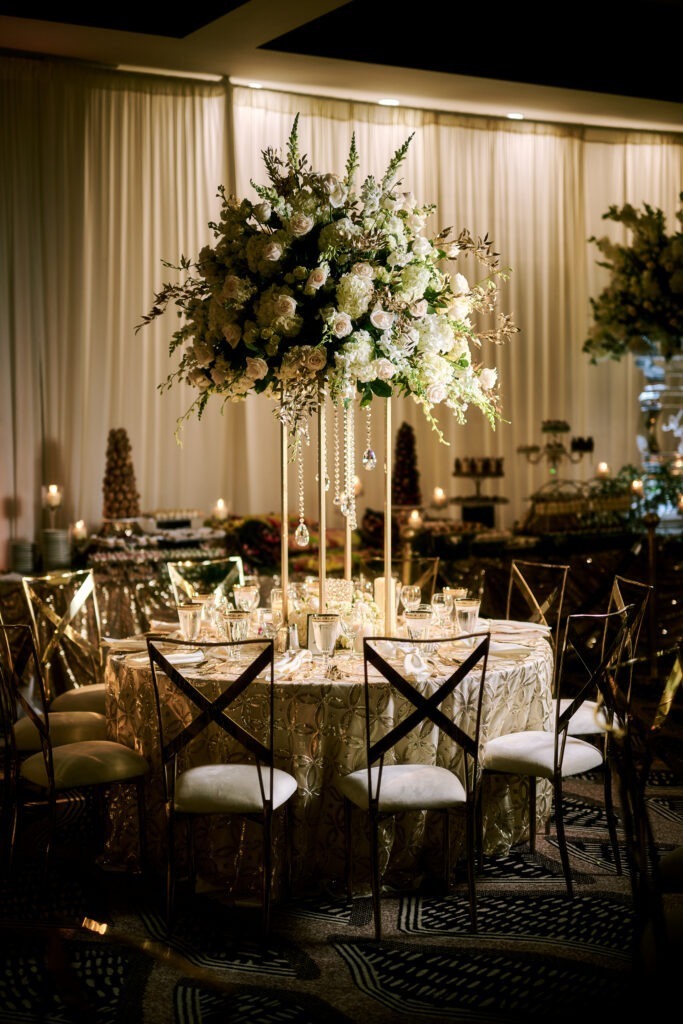
Color temperature, petal texture, how the flowers interact with candlelight, what the tablescape looks like when someone’s standing versus sitting – these are the kinds of details we dig into during planning. By installation day, there are no surprises left. Just the good kind of reveal when you see the finished room.
An outdoor ceremony aisle has one massive advantage over indoor – you’re working with natural light, real air, and the landscape as a built-in backdrop. When the setting is already doing something beautiful, our job shifts from creating atmosphere to enhancing what’s already there.
Central Park ceremonies at spots like Cop Cot or the Conservatory Garden have greenery surrounding the aisle on three sides. Heavy floral additions compete with the natural environment instead of complementing it. A few ground-level clusters in soft tones tucked along the aisle edges, maybe petals on the path, and let the park do what the park does. We’ve made that recommendation to couples who originally wanted a full garden build and every single one thanked us afterward when they saw the photos.
Rooftop ceremonies are the opposite problem. Bare deck, metal railings, and a skyline view that dominates the background. The aisle itself needs more floral help because the immediate surroundings are urban, not green. Potted trees lining the path, dense ground arrangements at every other chair, trailing greenery wired to the railings – these moves give the aisle a lush feeling that the concrete surface doesn’t provide on its own.
Not every ceremony space in NYC gives you a dramatic 50-foot processional runway. Restaurant ceremonies, loft weddings, small chapel weddings, intimate rooftop setups – sometimes the aisle is twelve feet long and seats fifteen people on each side.
Short aisles actually need more floral attention per linear foot, not less. A twelve-foot aisle with nothing on it reads as an empty gap between two sections of chairs. The same twelve feet with a tight row of low arrangements, petals on the runner, and a strong anchor piece at the altar end reads as intentional and designed. We compress the spacing, use slightly smaller vessels, and pack more detail into a tighter space. The result photographs as lush rather than sparse.
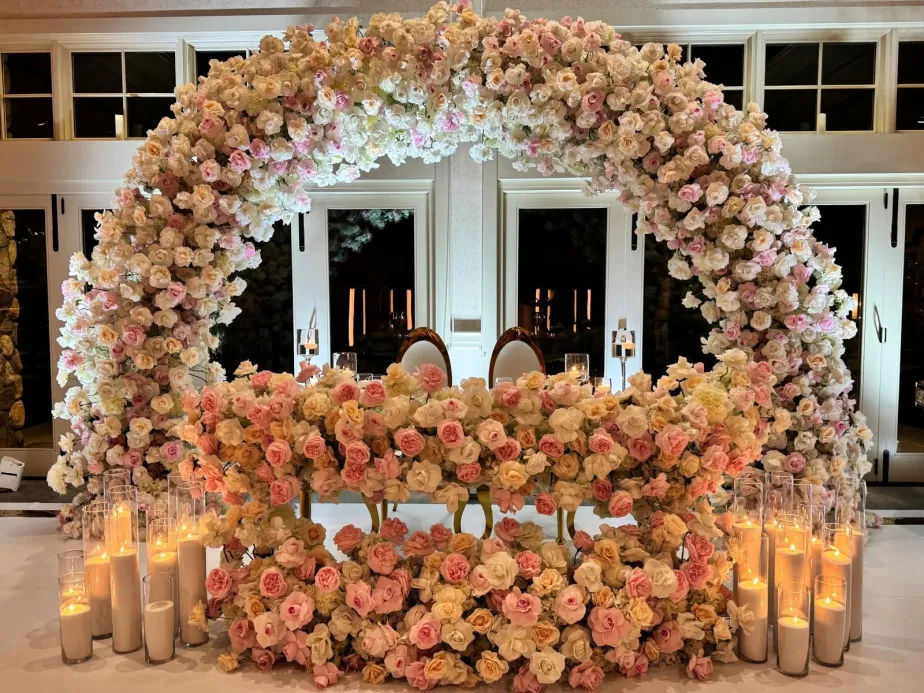
The aisle isn’t a standalone element. It leads somewhere – to the arch, the chuppah, the altar arrangement, the backdrop wall, whatever’s anchoring the ceremony space. The floral language along the aisle needs to feed into that endpoint naturally.
Color intensifies as you move toward the altar. That’s a technique we use a lot. Lighter, more subdued blooms at the back of the aisle where guests enter. Richer, deeper tones as the path approaches the ceremony focal point. The transition is subtle enough that nobody consciously notices it, but the cumulative effect pulls the eye forward and creates a sense of arrival as the bride reaches the front. Photography catches this really well in overhead and wide-angle shots where the entire aisle is visible in one frame.
Or sometimes we reverse it. Full density and saturated color at the entrance, thinning out toward a minimal altar area. Works better when the ceremony backdrop is a view – skyline, ocean, garden – that shouldn’t compete with heavy florals.
Aisle arrangements are prime candidates for relocation during the cocktail hour transition. Ground-level clusters move to cocktail tables. Pew-end pieces become bar accents. Lantern groupings shift to lounge areas or the perimeter of the dance floor. A garland from the aisle runner gets repositioned along a reception table.
We plan for this from the jump. Vessel size, weight, attachment method – all chosen with the second placement in mind. A pew-end arrangement wired with four zip ties and a padded clamp takes too long to detach and re-mount somewhere else during a 45-minute cocktail hour window. But a clip-on piece with a quick-release hook? Thirty seconds and it’s on a new surface. That kind of mechanical decision during the design phase pays off hugely in execution speed on the actual day.
Depends on three things. How long is the aisle. How dense do you want the floral coverage. And are we doing ground-level only, or incorporating vertical and overhead elements.
A modest setup – petals on the runner, ground clusters at every third chair on one side only – is the entry point. Full treatment on both sides with coordinated pew markers, lantern integration, and a graduating color scheme from back to front is the upper range. Overhead elements with suspended florals on rigging hardware add a structural component that bumps the number further.
All of it shows up as a separate section in your proposal, broken out per element. You can scale any piece up or down without touching the rest of the ceremony budget. Want to go big on the aisle and keep the altar simple? We’ll crunch those numbers. Want a statement arch and a minimal aisle? Also works. We lay out the options and you tell us where the priority sits.
Churches, synagogues, hotel ballrooms, loft spaces, rooftop decks, public parks, private gardens, restaurant back rooms. We’ve designed aisle florals in all of them and we know the attachment rules, the fire codes, and the setup access at dozens of specific locations.
The entire bridal party walks this path before the bride does. Six bridesmaids, four groomsmen, two flower girls, a ring bearer, and an officiant – that’s a lot of feet passing within inches of your floral arrangements. Everything we place on the aisle is stable enough to handle the parade.
We think about aisle florals from the camera’s perspective first. How does the arrangement read in a wide shot from the back of the room. How does it look at ankle height in the close-up of the bride’s train passing by. Both angles get considered during design.
Strike after the ceremony and relocation to the reception space are included. We handle both on a timeline coordinated with your planner and venue team.
Call us at (929) 833-8990 or fill out the form below. We’ll ask about your ceremony venue, the aisle dimensions, your seating layout, and the overall visual direction you’re leaning toward. From there we put together an aisle-specific proposal with placement options at different investment levels.