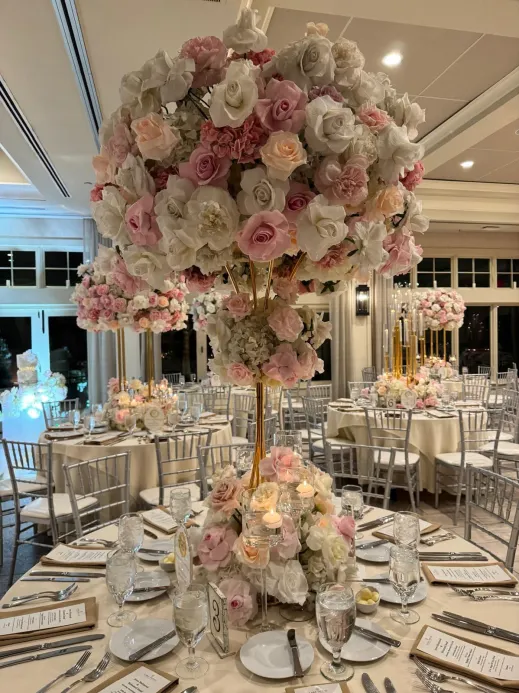
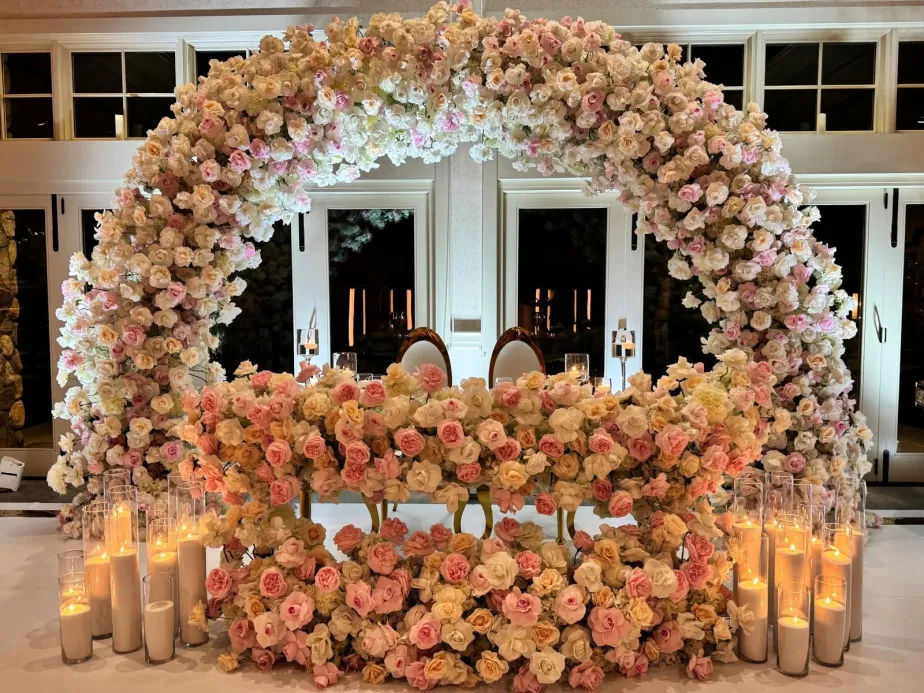
Old money. Museum galas. Limestone townhouses with doormen who’ve been working the same lobby since the Reagan administration. The Upper East Side doesn’t do trendy. It does timeless. And the weddings up here reflect that – couples whose families have been members at the same private club for three generations, ceremonies at churches where the pew arrangements better not clash with the stained glass that’s been there since 1892, receptions at The Met where your centerpieces are competing for attention with actual Monets hanging on the wall behind them. Our studio has designed flowers for UES weddings long enough to understand that the rules here are different. Not harder or easier than other neighborhoods. Just different. And getting them wrong is the kind of mistake that a Park Avenue mother of the bride will never let you forget.
In Williamsburg, a slightly unruly arrangement with a stem poking sideways reads as charming and intentional. On the Upper East Side, that same stem reads as sloppy. Precision matters here more than anywhere else we work. Roses need to be at peak bloom – not a day early, not a day past. Greenery should look manicured, not wild. Vessels should be polished, not “patina’d.” Ribbon wraps on bouquet handles should be tight and clean, not frayed at the edges for a rustic effect.
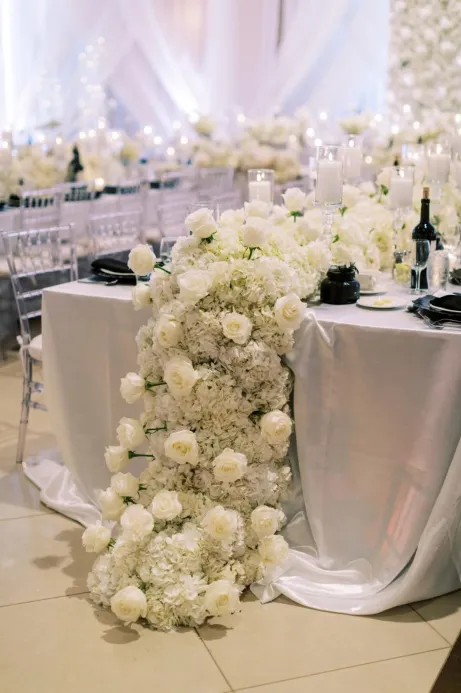
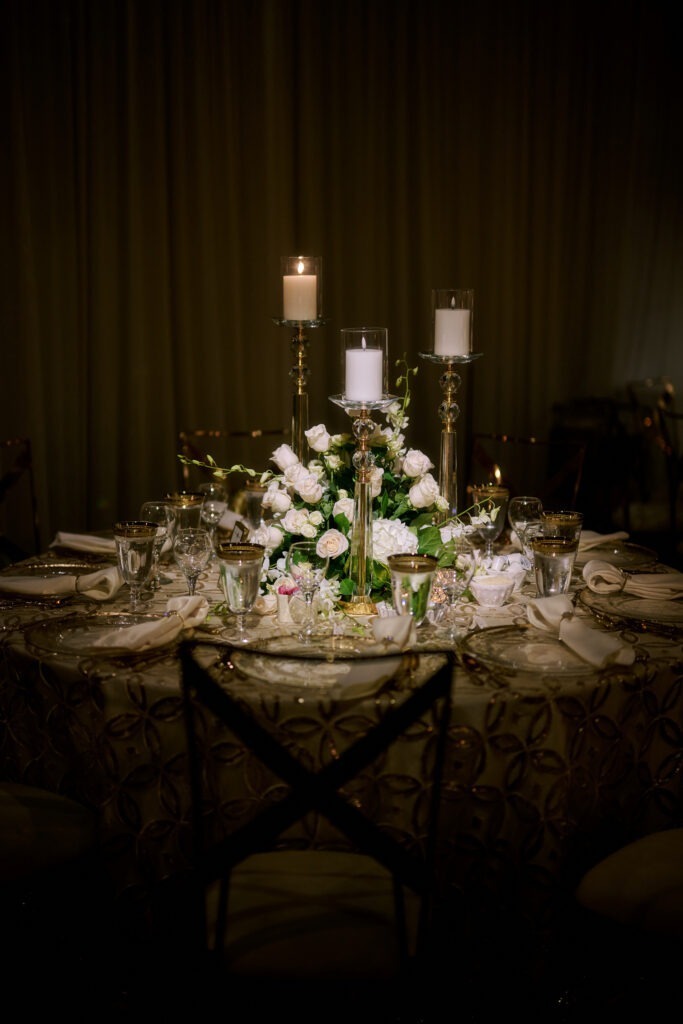
None of this means boring. Classic UES wedding florals can be extraordinarily beautiful when done with the right materials and the right eye. A silver compote overflowing with ivory garden roses, white ranunculus, and trailing jasmine on a table set with Bernardaud china and sterling flatware? That’s not boring. That’s a level of refinement most florists never get asked to achieve and wouldn’t know how to pull off if they were.
We’ve been doing this long enough on the Upper East Side to know the difference between “classic” and “stale.” Classic holds up across decades. Stale is what happens when a florist confuses tradition with laziness and delivers the same three-rose-and-baby’s-breath arrangement they’ve been recycling since 1997. Our designs honor the neighborhood’s aesthetic values while actually being designed – with thought, with intention, with the kind of compositional skill that people who live around art every day can appreciate.
More UES weddings start in a church than in any other neighborhood we service. St. James’ Episcopal on Madison. St. Ignatius Loyola on Park. Church of St. Vincent Ferrer. St. Jean Baptiste. Temple Emanu-El for Jewish ceremonies on Fifth Avenue. Each one has a distinct interior, a distinct set of floral guidelines, and a sacristan or event coordinator whose preferences we’ve learned to respect and work within.
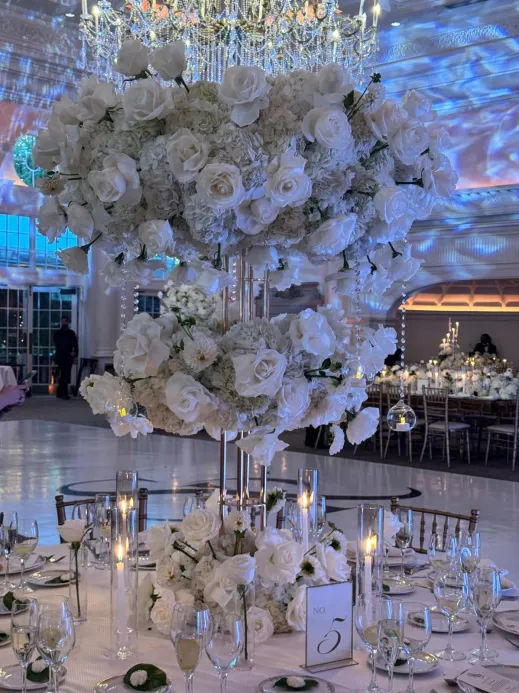
St. Ignatius has a cavernous interior with barrel-vaulted ceilings that go up forever. Small arrangements disappear in that room like a whisper in a hurricane. You need scale. Tall altar urns with branches reaching upward. Substantial pew markers that register from across a 200-foot nave. We’ve seen florists show up to St. Ignatius with cute little arrangements that looked fine on a design table and completely vanished once they were placed inside a building that seats 900 people. Scale is math and you have to do the math before you build.
Temple Emanu-El is a different story. The sanctuary is massive too but the existing architectural detail – mosaic tile, carved stone, wrought iron gates – provides so much visual texture that heavy florals can actually overwhelm the space. A few well-placed arrangements that complement the existing beauty rather than competing with it. That’s the move at Emanu-El. Every time.
We call ahead to every church and synagogue before designing anything. Which altar surfaces are available. Whether pew attachments are permitted and what method is approved. Where the wedding party stands relative to the floral placement. Whether the venue provides pedestals or we bring our own. These conversations happen weeks before the wedding, not the morning of.
The Upper East Side has a concentration of private social clubs that host weddings for members’ families. The Colony Club. The Cosmopolitan Club. The Metropolitan Club on 60th and Fifth. The Knickerbocker Club. The Union Club. Some of these venues don’t have public websites. A few of them barely acknowledge that they host events at all. Getting access to design in these rooms requires either a member connection or a reputation strong enough that the events director trusts you based on word of mouth.
We’ve been invited into several of these spaces by families who wanted their wedding florist to match the level of the venue. These clubs have interiors that were designed by people like Stanford White and McKim Mead & White. The moldings, the paneling, the mantels, the chandeliers – every surface has a point of view. Flowers that ignore that context and just do their own thing create a visual dissonance that’s immediately noticeable to anyone who’s spent time in those rooms.
What works is restraint guided by quality. Fewer arrangements, but each one made with the best stems money can buy. A palette that references the room’s existing color scheme – picking up the blush in the marble, the cream in the damask wallpaper, the deep green of the velvet drapery. Vessels that look like they belong on the mantel, not like they arrived in a catering crate. This is designing for a context, not against it. And the families who book these clubs understand the difference instantly.
We’ve coordinated with sacristans and event staff at the major Upper East Side houses of worship. Floral placement rules, approved attachment methods, timeline requirements – we know the drill.
We can provide references from families whose weddings we’ve designed at private UES clubs. These venues value discretion and so do we.
The Met. The Frick. The Neue Galerie. The Jewish Museum. Getting married at an Upper East Side museum puts your celebration inside a building that was designed to display beautiful things. Your flowers become part of that display whether you planned for it or not.
Designing at The Met is a specific kind of pressure. The room you’re using – the Temple of Dendur, the American Wing, the Petrie Court – already has a visual identity so powerful that people fly from around the world just to stand inside it. You can’t out-decorate The Met. Don’t try. What you can do is place floral moments that harmonize with the existing environment and add a layer of warmth and personalization that the museum’s permanent collection can’t provide.
At the Temple of Dendur, we’ve kept arrangements low and warm-toned to avoid competing with the temple structure and the massive glass wall behind it. At the Petrie Court, we’ve used tall branch arrangements that echo the courtyard’s garden aesthetic and extend the vertical sight lines created by the sculpture. Each room has its own visual personality and we design to complement rather than dominate.
The Frick is more intimate but the art on the walls is staggering. A Vermeer in one room, a Bellini in another. Flower arrangements positioned near a $200 million painting better look like they deserve to be in the conversation. We source our most exceptional stems for Frick weddings – unusual varieties, rare color tones, blooms with the kind of depth and complexity that holds up next to Old Master paintings. Sounds pretentious maybe. But when you’re arranging flowers three feet from a Rembrandt, pretentiousness and professionalism become the same thing.
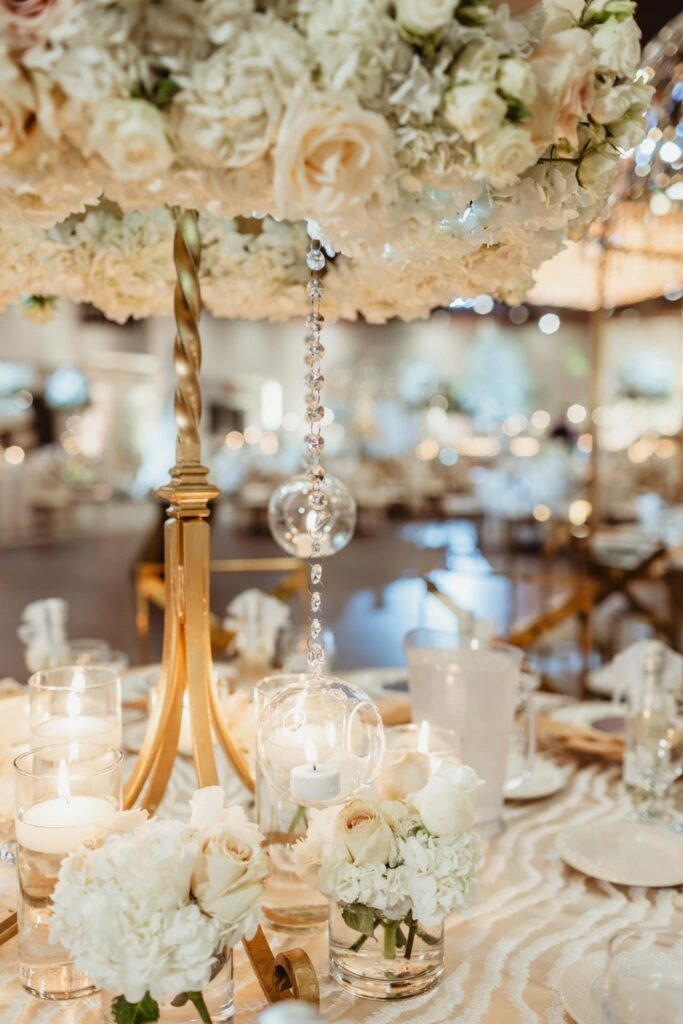
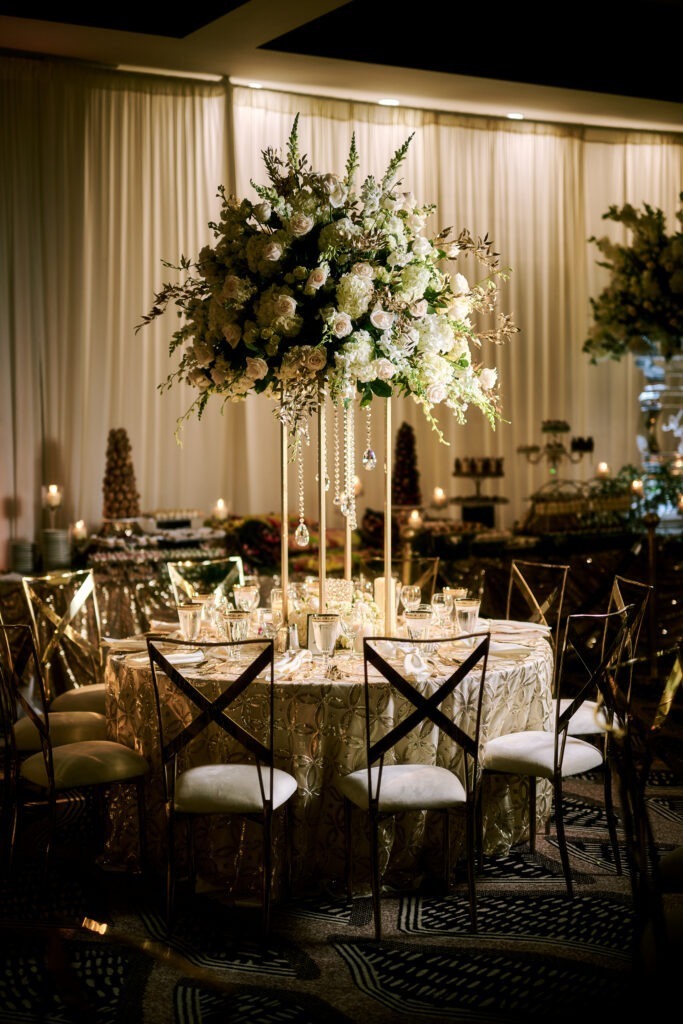
The Mark. The Surrey. The Carlisle. The Lowell. These boutique Upper East Side hotels host intimate wedding receptions where the guest count is smaller but the expectations per guest are extremely high. A 60-person dinner at The Mark isn’t a scaled-down version of a 250-person ballroom wedding. It’s a completely different animal. Every table is visible to every guest. Every arrangement gets scrutinized up close. There’s nowhere to hide a B-minus centerpiece behind a dance floor partition because the room is tight enough that everybody sees everything.
We treat small hotel receptions on the UES with even more obsessive quality control than our larger-scale work. Each centerpiece gets individually inspected and adjusted after placement under the real lighting. Bloom faces oriented toward the seats where guests will actually sit. Petals with even minor bruising swapped out on site. The margin for “good enough” shrinks to zero in a room where twelve people are sitting four feet from the arrangement.
The Carlisle has a particular old-Hollywood glamour that pairs beautifully with lush, monochromatic arrangements. All white. All blush. All deep burgundy. A single color story dialed up to maximum intensity. The Mark runs more contemporary, and the floral design can be bolder and more fashion-forward there. The Surrey sits somewhere between the two. We’ve designed at all three and the repeat work at each one has taught us what the regular clientele at these hotels expects. Which is a lot.
A private townhouse wedding on the UES is about as exclusive as it gets in New York. A five-story limestone on a tree-lined block between Park and Madison. A private garden out back barely visible from the street. Forty guests. A string quartet in the parlor. Dinner upstairs in the formal dining room. Flowers in every room the guests will walk through.
These weddings require a room-by-room floral plan. The entry foyer gets a statement piece – something guests see the instant the door opens. The parlor where the ceremony happens gets altar arrangements scaled to the mantelpiece and the fireplace dimensions. The staircase gets a garland winding up the banister. The dining room gets centerpieces calibrated to a table that seats twelve, not thirty. The garden gets a few strategic pieces if the weather cooperates.
Each room has different light. The parlor with south-facing windows reads bright and warm. The dining room with north exposure reads cooler. Colors that pop in one room can fall flat in the next if we haven’t scouted the light in advance. We do a walkthrough of the home before designing and note the light direction and intensity in each space where flowers will live. That walkthrough takes an hour. The information it provides shapes every design decision that follows.
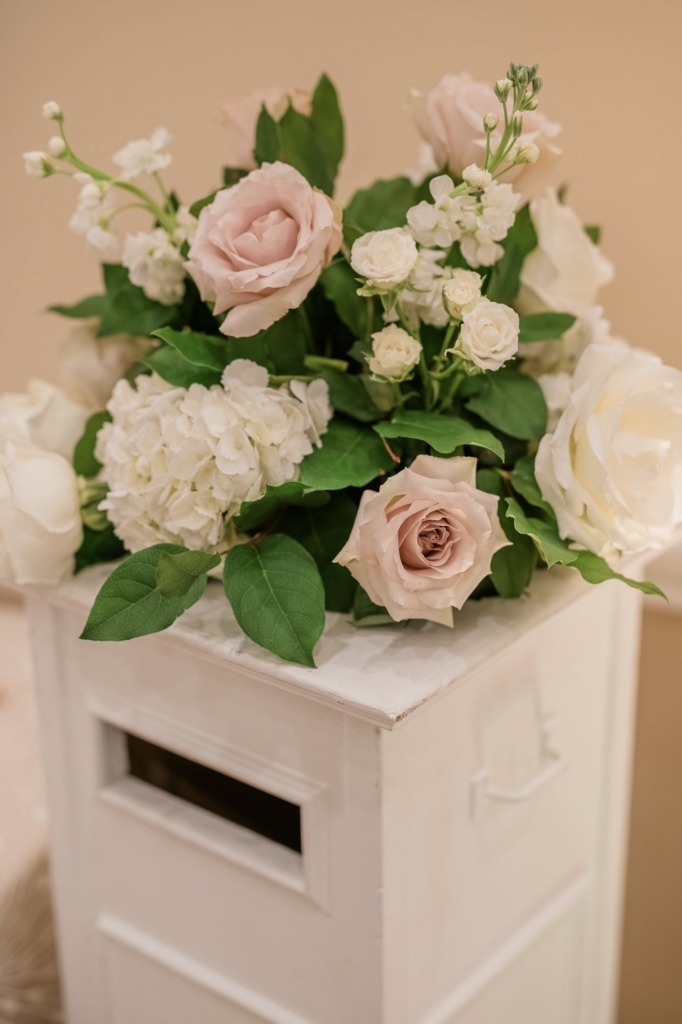
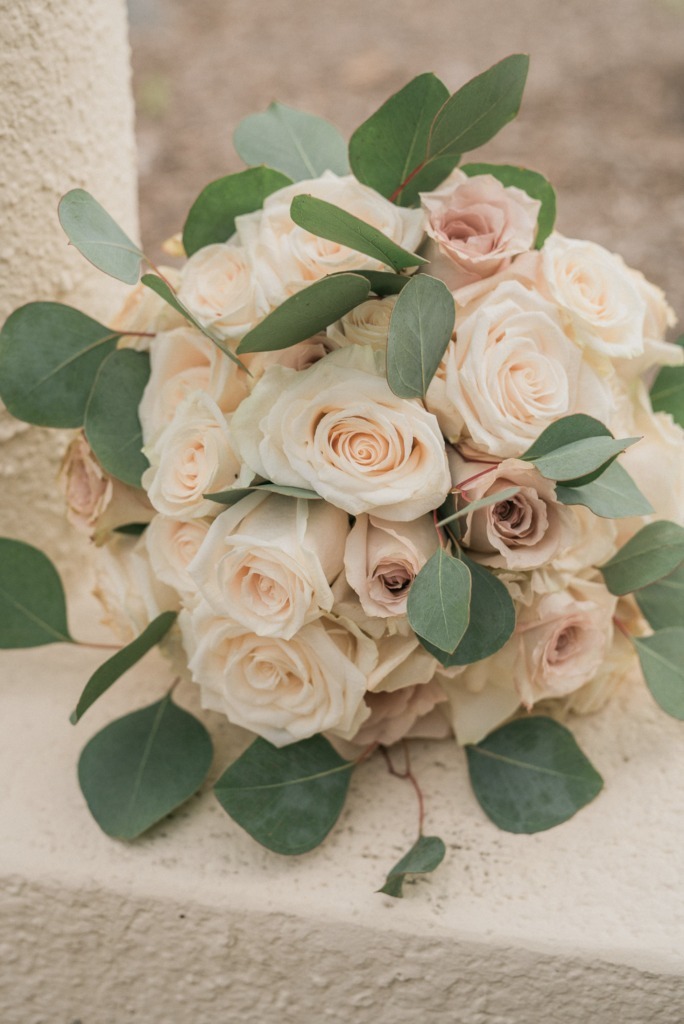
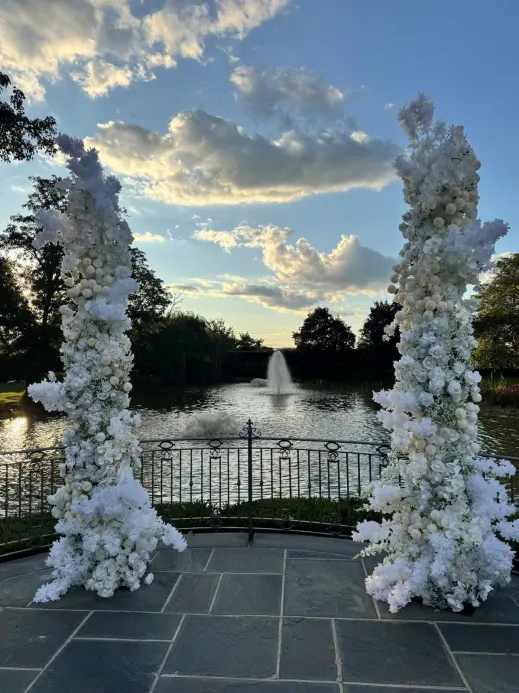
Ivory, blush, cream, champagne, white, soft lavender, dusty rose, sage. These tones dominate Upper East Side weddings and they’ve dominated for decades. The reason isn’t lack of imagination – it’s context. These colors harmonize with marble floors, limestone facades, museum interiors, silk wallcoverings, and the general architectural palette of the neighborhood.
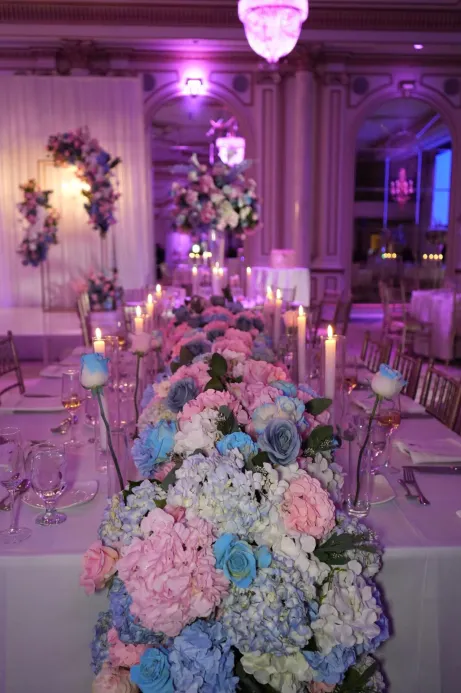
Bold colors work too, but they require a more confident hand. A deep burgundy and forest green palette at a Neue Galerie wedding – gorgeous, and the venue’s Klimt-era aesthetic actually called for that richness. An all-red rose installation at a private club holiday season wedding – striking against the dark wood paneling. Jewel tones at a Temple Emanu-El reception where the mosaic work already incorporated sapphire and emerald. Each of those departures from the default palette worked because the color choice was responsive to the specific room, not just pulled from a trend report.
When a UES bride tells us she wants color, we ask which room it’s going in before we pull a single swatch. The answer to “should we go bold?” on the Upper East Side is almost always “it depends on the walls.”
The clientele on the Upper East Side has access to and familiarity with the best of everything. These are households that get weekly flower deliveries from high-end shops on Madison Avenue. The bride’s mother has opinions about peony varieties. The grandmother can tell the difference between a $3 stem and a $12 stem from across the room. The expectations for bloom quality at a UES wedding sit higher than anywhere else we work.
We respond by sourcing harder. First picks at the wholesale market on delivery mornings. Stems graded A-1 only. Nothing past its prime, nothing with bruised outer petals that “won’t show once they open.” Premium garden roses from Ecuador in specific named varieties – Juliet, Keira, Patience – not generic “blush roses” from whoever had stock that week. Ranunculus from Italian growers when the Japanese supply runs out. Peonies reserved with our wholesale contacts weeks in advance during peak season because the good ones disappear by 7 AM.
This level of sourcing costs more per stem. That cost shows up in the proposal and we explain what you’re paying for. A UES bride who’s used to receiving Juliet roses in her personal arrangements at home will notice immediately if we substitute a lesser variety. So we don’t substitute. We source what we promised or we call you and discuss the alternative before making a change. That accountability is part of the service.
Our Midtown studio sits roughly ten blocks south and a few avenues west of the core Upper East Side wedding zone. By NYC delivery standards, that’s practically next door. We’re on site in fifteen minutes during a normal Saturday morning. Even with crosstown traffic on 57th or 59th, we’re looking at twenty-five minutes max.
That proximity means we can do last-minute venue checks, drop off supplemental arrangements if a bride adds a piece during the final week, and get a crew to the site fast for setup adjustments. A florist commuting from New Jersey or outer Brooklyn doesn’t have that flexibility. When the event planner calls at 3 PM asking if we can add a small arrangement to the powder room before guests arrive at 5, we can actually say yes and mean it.
Classic, elegant, polished florals that match the visual standards of the Upper East Side’s most prestigious venues and private residences.
Premium stems from top-tier growers, hand-selected at the market, conditioned at our studio, and inspected individually before delivery. The caliber of bloom that belongs next to a Vermeer.
Churches, clubs, museums, hotels, restaurants, private homes – we’ve designed in all of them and the people who manage these spaces know our work and trust our team.
UES weddings often involve prominent families, high-profile guests, and venues that value privacy. We operate accordingly. No social media posting without explicit permission. No attention-seeking behavior on site. Just flowers, delivered quietly and beautifully.
Call us at (929) 833-8990 or fill out the form below. Tell us your venue, your wedding date, and a sense of the formality level and aesthetic direction. We’ll set up a conversation and start building a floral plan that meets the standards this neighborhood demands – because settling for anything less on the Upper East Side isn’t really an option.