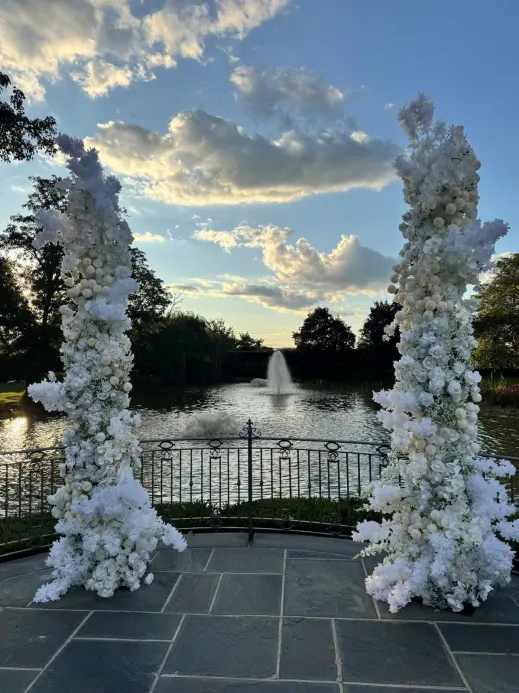
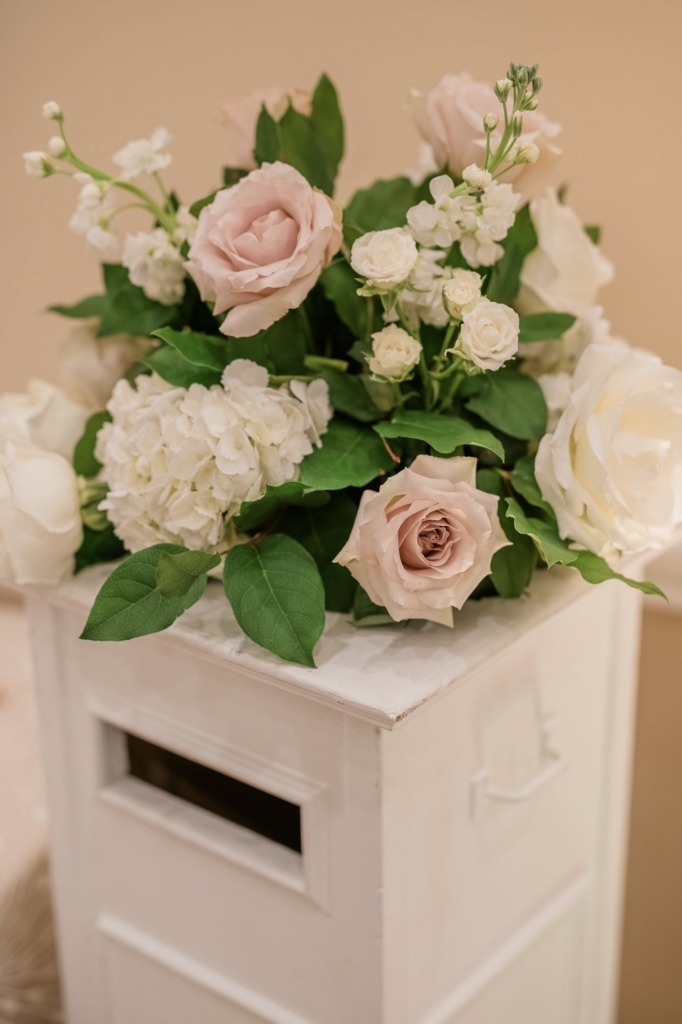
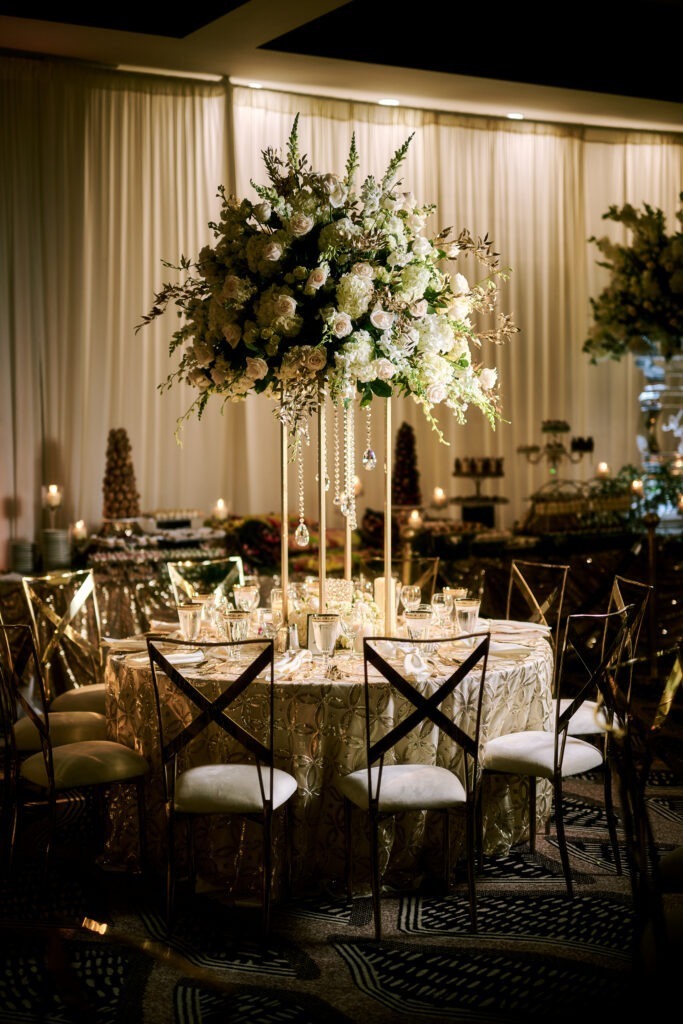
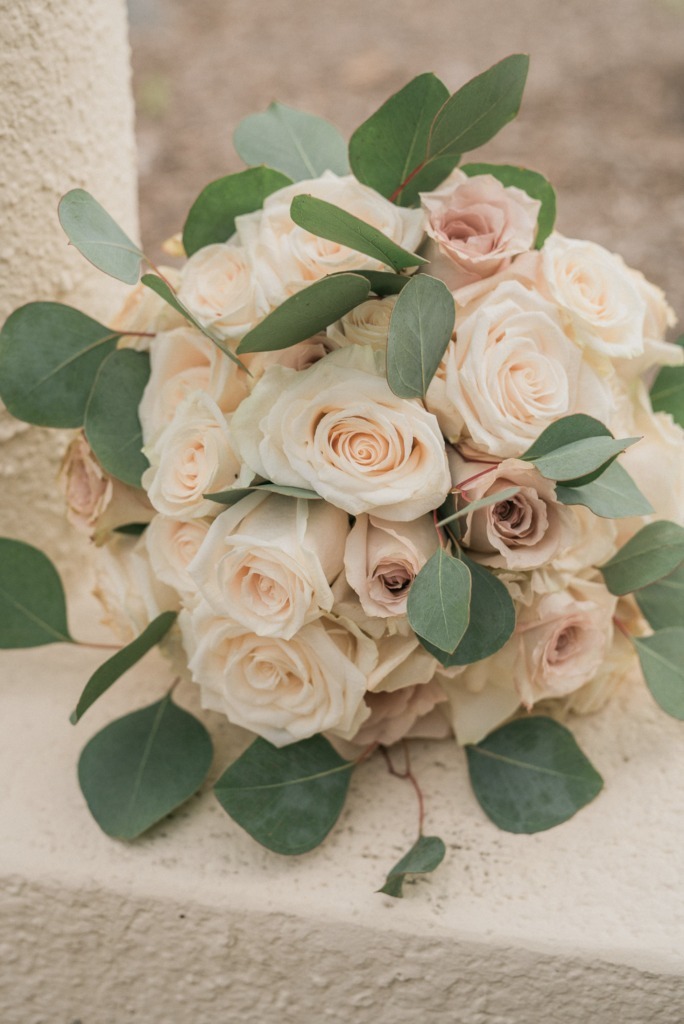
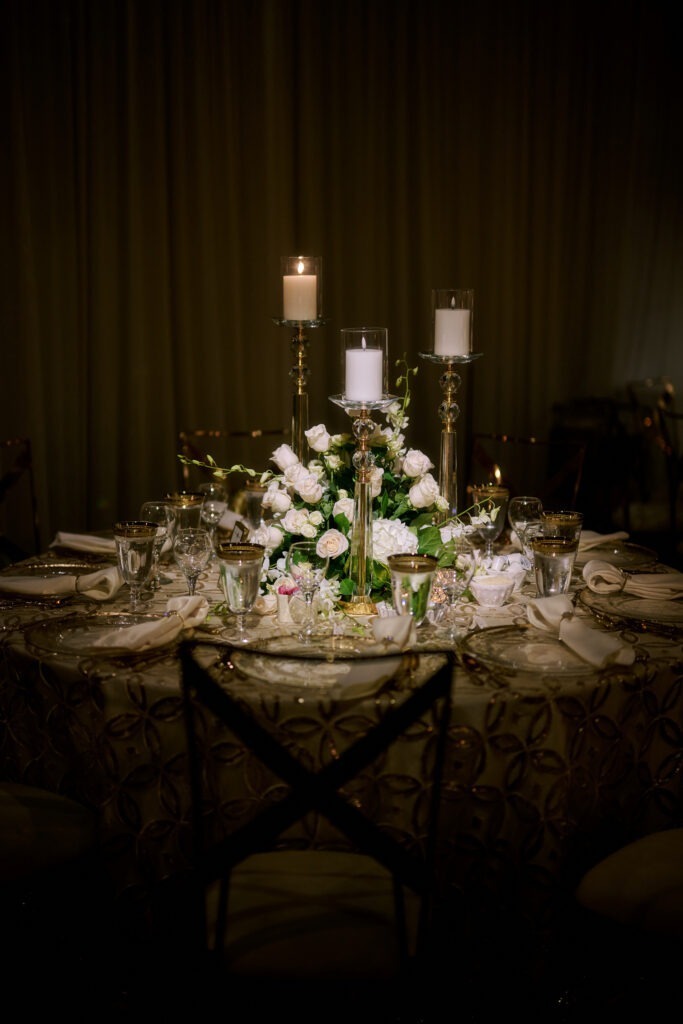
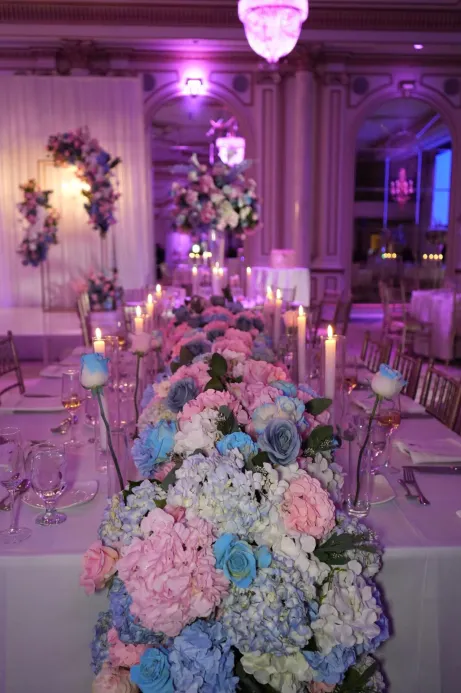
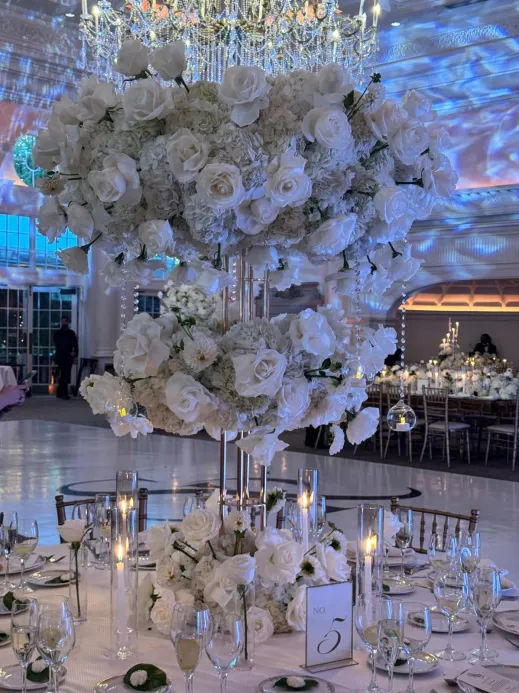
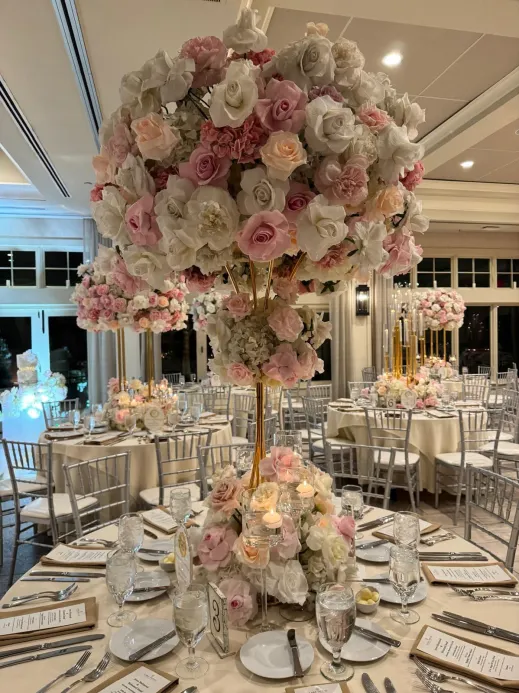
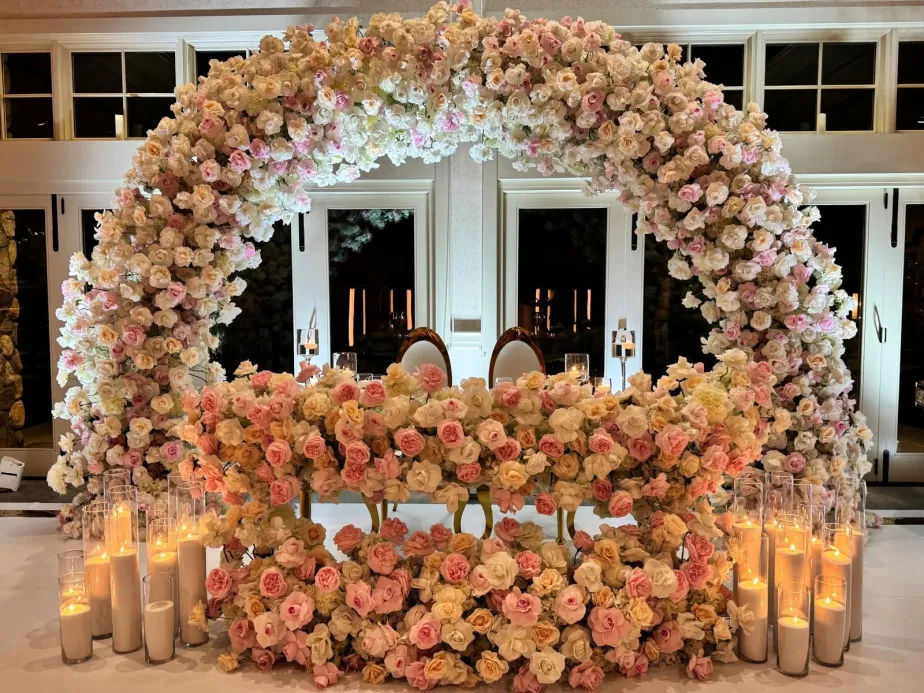
Chelsea occupies maybe forty blocks of Manhattan’s west side and somehow packs in more visual range than most entire boroughs. A gallery district that rotates world-class art every six weeks. The High Line floating above the streets with built-in landscaping designed by Piet Oudolf. Restaurant row on the lower twenties where chefs with Michelin stars host private buyout dinners. Industrial event spaces carved out of old printing houses and meatpacking cold storage buildings. Our studio has been hauling flowers into Chelsea venues for years and the neighborhood keeps forcing us to reinvent our approach because no two blocks down here want the same thing.
You feel it walking around this neighborhood on a weekday. Photography crews shooting campaigns outside the gallery buildings. Models ducking into casting calls on 25th Street. PR firms hosting product launches in the same event spaces where a wedding happened last Saturday. Chelsea’s creative energy is everywhere and it seeps into the weddings that happen here whether couples consciously plan for it or not.
Brides booking Chelsea venues tend to have sharper visual instincts than average. They’ve been inside galleries. They’ve scrolled past editorial content shot on the very street where their ceremony is happening. They arrive at the consultation with references pulled from architecture magazines and fashion campaigns, not just bridal blogs. And they can tell the difference between an arrangement that was designed with a point of view and one that was assembled from a formula.
We love that. A Chelsea bride who pushes us is a Chelsea bride who gets our best work. The conversations are more specific, the design process is more collaborative, and the final product reflects a level of creative ambition that we genuinely enjoy rising to meet.
Hard to overstate how much the High Line changed Chelsea as a wedding destination. Before it opened, this was a neighborhood people drove through on the way to the Meatpacking District. Now couples specifically choose Chelsea venues because they want wedding photos on an elevated park with native plantings and Manhattan architecture framing every shot.
We’ve coordinated with photographers who build their entire portrait timeline around High Line access – twenty minutes up on the park between the ceremony and cocktail hour, shooting against the grasses and wildflowers that Oudolf planted. The floral question for those portrait sessions is whether to design the bridal bouquet to complement the High Line’s own plantings or contrast with them. Both can work. A loose garden bouquet in soft tones blends with the meadow aesthetic and makes the bride look like she belongs in that landscape. A bold, saturated bouquet in deep jewel tones pops against the muted greens and browns and makes the bouquet itself the focal point of every frame.
We talk this through during consultation. Where are your portraits happening. What time of year. What’s blooming on the High Line during that month – because the planted sections change dramatically between April and October. A bouquet designed without considering the portrait backdrop is a missed opportunity, and we don’t miss those.
West 20s between Tenth and Eleventh Avenue. This is where most of Chelsea’s dedicated wedding and event venues cluster, and the shared DNA between them is unmistakable. Post-industrial architecture. Concrete floors. Metal-framed windows. High ceilings. Neutral palettes on every surface. If you’ve toured one gallery-district venue in Chelsea, the bones will feel familiar at the next three – but the layouts, the light, and the load-in logistics differ enough that each one needs its own floral strategy.
Metropolitan West on West 28th is one of the bigger rooms. Column-free, which is a luxury for large installations because nothing blocks your suspended piece from the main sightline. The ceiling is rigging-friendly and we’ve done hanging arrangements there ranging from a single focal cloud over the dance floor to a full suspended garden running the length of a dinner table configuration.
Metropolitan Pavilion on 18th is tighter but has a warmth to it that the bigger industrial spaces lack. Lower ceilings, which means tall centerpieces need to be carefully scaled so they don’t feel like they’re bumping the overhead. Good loading access from the street level though – a relief after some of the elevator nightmares we deal with in other neighborhoods.
Lightbox on West 26th has glass walls on two sides and a rooftop terrace that opens up for warm-weather ceremonies. The natural light situation in Lightbox changes by the hour, and we’ve watched the same blush arrangement go from “perfect” at 3 PM to “invisible” at 7 PM once the sun dropped behind the buildings to the west. Deeper colors and strong greenery hold up better in that transitional lighting.
Metropolitan West, Metropolitan Pavilion, Lightbox, Highline Stages, and several rotating private gallery spaces. We’ve loaded in, set up, and struck at all of them.
Fashion-forward, editorial, art-referenced, rule-breaking design concepts? Bring them. Chelsea is the neighborhood where that energy thrives and we match it.
Chelsea’s southern edge bleeds into the Meatpacking District, and the venues along that border straddle both neighborhoods’ identities. Catch Steak’s event space. The rooftop at RH Guesthouse. Various pop-up venues in converted meatpacking warehouses. Gritty industrial character with high-end hospitality layered on top.
Floral design in the Meatpacking border zone leans bold. The venues have attitude and the arrangements need to keep up. Strong shapes. Saturated color. Unexpected combinations – a tropical orchid installation in a room that used to refrigerate beef carcasses. The contrast is part of the charm and leaning into it rather than fighting it produces work that photographs with real energy.
One practical note about this micro-neighborhood. Street-level access for delivery vehicles is tight. Cobblestone streets that look charming in engagement photos are murder on van suspension and rolling carts. We’ve switched to hand-carrying arrangements the final block to certain Meatpacking venues because the cobblestones rattle everything loose. Slightly more labor. Dramatically safer for the flowers.
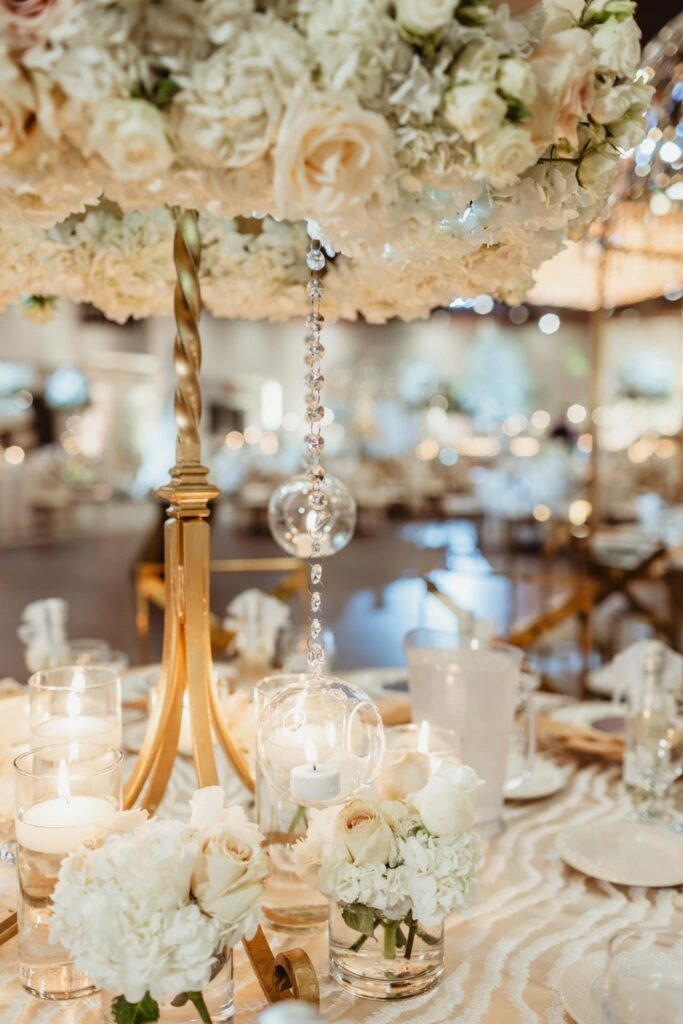
Buddakan. Tao Downtown. Morimoto. La Sirena before it closed. Chelsea has a density of large-format restaurants with private dining and full buyout options that rival any neighborhood in the city for wedding receptions.
Restaurant buyouts present the same design philosophy we follow everywhere – read the room. Buddakan already has a massive communal table, dramatic lighting, and an interior design scheme that probably cost seven figures to build out. Flowers that try to transform Buddakan into something it’s not are fighting a losing battle and wasting money in the process. Better to enhance what’s already working. A low, lush garland on the communal table that adds organic texture to all that dark wood and candlelight. Bar flowers that reference the restaurant’s own aesthetic. An accent arrangement near the private dining entrance that signals “wedding” without shouting it.
Tao Downtown is a different beast. The space is massive, the decor is maximal, and a 16-foot Buddha statue is already the focal point of the room. We’ve done wedding florals at Tao where the smartest move was concentrating everything at table level and on the personal flowers – bouquets, boutonnieres, sweetheart table – and letting the venue’s own over-the-top design handle the atmospheric heavy lifting above eye level. Why compete with a giant golden statue? You won’t win.
Chelsea Piers has been hosting events for decades along the Hudson River waterfront. Pier Sixty, The Lighthouse, Current – these are big rooms with water views and the capacity for guest counts that would burst the walls of most boutique venues in the neighborhood.
Floral design at the Piers requires scale. The rooms are wide, the ceilings are high, and the windows frame a river view that stretches to New Jersey. Small arrangements evaporate in these spaces. We push centerpiece sizes up, go taller with accent pieces, and use the river-facing windows as our backdrop instead of competing with them.
The waterfront location also means humidity levels run slightly higher than venues farther inland. We factor that into our variety selection – nothing too delicate for the stems that’ll be sitting nearest the window wall. Lisianthus holds up. Sweet peas don’t. Garden roses are fine if they’ve been properly conditioned. Peonies depend on how tight the buds are when they arrive – too open and the humidity accelerates their bloom cycle past the point of no return before dinner even starts.
A few Chelsea galleries rent their spaces for private events between exhibition rotations, and occasionally during a show if the work on display is appropriate for a celebration context. Getting married inside a gallery surrounded by contemporary art on the walls is a specific kind of experience. The art sets a tone that your flowers either respond to or ignore – and ignoring it is a mistake we’ve seen other vendors make.
We ask to see the current exhibition or at minimum photos of the gallery interior before designing anything. One spring wedding happened during a show of large-scale abstract paintings in electric blue and burnt orange. We pulled a palette for the table arrangements that lived in the warm neutral family – creams, taupes, soft peach – specifically so the flowers wouldn’t fight the art for attention. The result was a room where the paintings commanded the walls and the flowers owned the tables, each respecting the other’s territory.
Another gallery wedding took the opposite approach. The show was black and white photography, very stark, very minimal. The couple wanted the flowers to provide all the color in the room. We went full saturation – magenta peonies, tangerine ranunculus, deep violet sweet peas, lime green viburnum. Every table was an explosion of color against the monochrome walls. Bold move. The bride had the confidence for it and the photos from that wedding are still some of the most striking in our portfolio.
Spring and fall are the power seasons for Chelsea outdoor options. The High Line is at its most photogenic when the grasses are young and green in April or when the seed heads turn bronze in late October. Rooftop venues along the gallery corridor open up as temperatures allow. Street-level patios at Chelsea restaurants push tables outside. Spring palettes lean delicate – tulips, sweet peas, hellebores, early ranunculus. Fall goes warmer and denser – dahlias, garden roses in sunset tones, branches with changing leaves, ornamental grasses that echo the High Line plantings.
Summer is doable but hot. Rooftop ceremonies in July mean direct sun exposure on flowers and on guests. We time our deliveries tight, pick the most heat-tolerant blooms in our repertoire, and position arrangements in whatever shade exists on the venue’s footprint. A pergola. An awning. The shadow cast by the building next door at 4 PM. Any shade source that buys the flowers an extra hour before the heat takes its toll.
Winter Chelsea weddings move fully indoors. Gallery spaces, restaurant private dining rooms, hotel venues along the Sixth Avenue corridor. Dense, moody florals in deep seasonal tones. Lots of candlelight integration. Branches – birch, curly willow, quince – as structural elements that fill vertical space without requiring massive bloom counts. Some of our moodiest, most atmospheric work happens in Chelsea between December and February when the neighborhood quiets down and the venues feel more intimate without the summer rooftop crowd.
Hudson Yards sits at Chelsea’s northern edge and depending on who you ask, it’s either part of Chelsea or its own micro-neighborhood. The event venues inside Hudson Yards – the restaurant spaces at various locations, the private event floors – cater to a more corporate-polished clientele than the gallery district venues further south.
Floral design at Hudson Yards leans sleek and modern because the architecture demands it. Everything about these buildings is new, shiny, and deliberately futuristic. Rustic farm-table garlands would look absurd in a space designed by Thomas Heatherwick. Clean-lined arrangements in contemporary vessels, monochromatic or very controlled color palettes, and architectural shapes that echo the building’s own design language – that’s the direction that works.
We’ve done a few wedding receptions in Hudson Yards private dining spaces and the vibe is closer to a luxury corporate event than a traditional wedding. Which is fine – some couples want that energy. The flowers just need to match the context. Polished, precise, minimal visual clutter. Every stem earns its place in the arrangement or it gets edited out.
West 56th Street to Chelsea is a straight shot downtown. Tenth Avenue runs relatively clear on Saturday mornings compared to the midtown crosstown routes that make us want to pull our hair out. Depending on the exact venue address, we’re looking at a ten to fifteen minute drive under normal conditions. Twenty if something weird is happening on the street grid, which in Manhattan means roughly every third Saturday.
Chelsea load-in is generally easier than Midtown or the Upper East Side because many of the event venues here were built or converted with large-scale events in mind. Ground-level entrances. Roll-up loading doors. Freight elevators that can actually fit a ceremony arch frame without disassembling it into twelve pieces first. Not every venue – some of the gallery spaces still have the original building infrastructure from the 1920s and those can be tight. But on average, Chelsea is friendlier to a flower delivery van than most Manhattan neighborhoods.
Street parking is another story. Gallery openings, restaurant traffic, construction projects that seem to be perpetual along Tenth and Eleventh Avenues. We coordinate curb access with the venue ahead of time or have a crew member stationed at the loading zone to hold it while the van is in transit. This sounds extreme until you’ve lost a loading spot to a FreshDirect truck at 7:45 AM and had to circle the block four times with a van full of hydrating centerpieces.
Gallery district, High Line corridor, Meatpacking border, Chelsea Piers waterfront, Hudson Yards edge, and the residential blocks in between. We’ve delivered flowers to all of them.
Gallery exhibitions, museum installations, and public art all influence how we approach Chelsea wedding florals. We’re comfortable designing next to someone else’s artwork because we understand the visual conversation that needs to happen between the two.
Wind-rated installations, heat-tolerant variety selection, weighted bases, and rain plan adaptability. Chelsea rooftop and terrace weddings get the outdoor preparation they require.
Ten minutes on a clear Saturday. We’re practically neighbors.
Call us at (929) 833-8990 or fill out the form below. Tell us which Chelsea venue you’re working with, your wedding date, and the visual direction you’re leaning toward. We’ll set up a design session and start building a floral plan around the specific room, the specific light, and the specific creative energy that makes Chelsea weddings unlike anything else in the city.