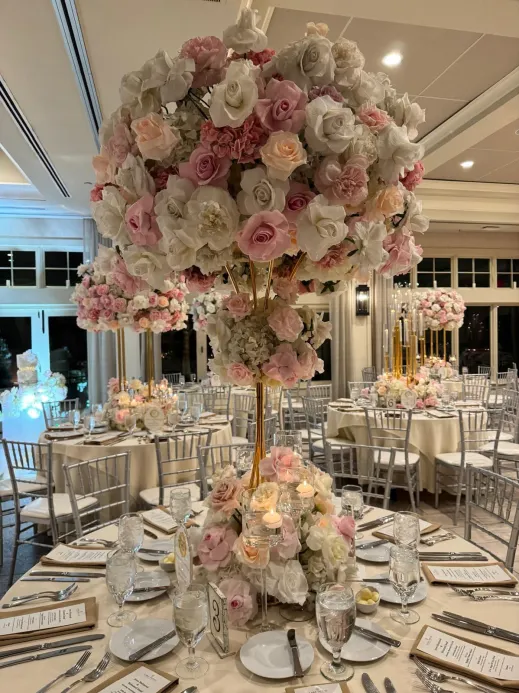
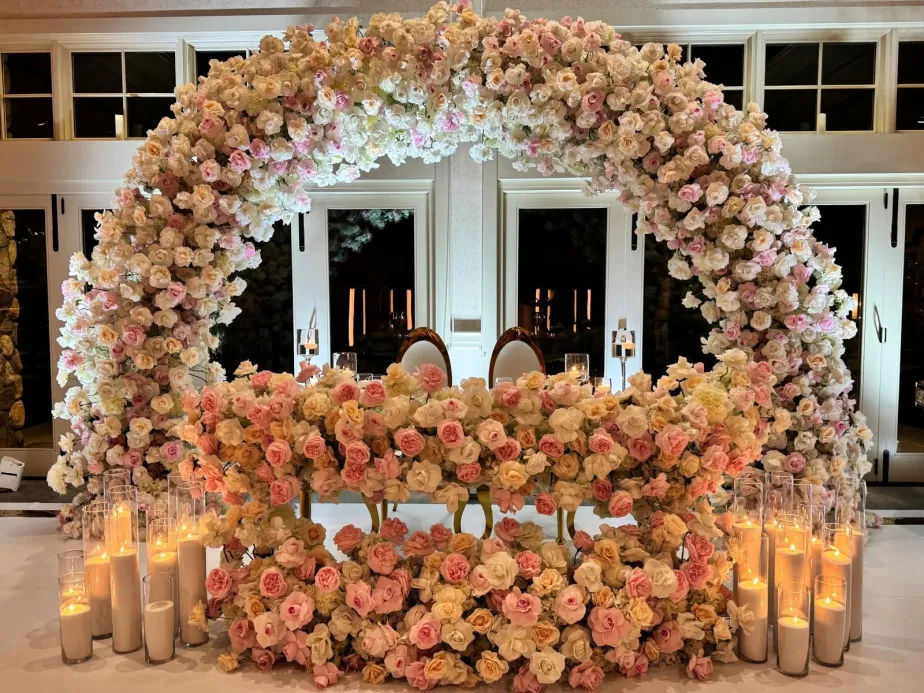
Somewhere around 2016, Long Island City stopped being “that industrial part of Queens near the Queensboro Bridge” and started being the neighborhood where Manhattan couples go when they want a skyline view better than anything they can afford on their own side of the river. The math is simple. Stand in LIC facing west at 6 PM in September and you’re staring directly at Midtown lit up like a movie set. Now put a ceremony arch in front of that view, a bride walking toward it, and a photographer who knows what they’re doing. That’s why LIC became a wedding destination. Not because somebody marketed it. Because the geography speaks for itself. Our studio has been making the short trip across the Queensboro for LIC weddings since before the neighborhood had a Whole Foods, and watching the venue scene explode over the past decade has been one of the more exciting things to happen in NYC wedding geography during our career.
Every florist who works LIC for the first time makes the same mistake. They design the ceremony like they would for a windowless ballroom – a big arch, heavy altar arrangements, a dense floral scene that commands attention from every angle. Then they set it up in front of a floor-to-ceiling window looking at the Chrysler Building and suddenly the flowers are blocking the entire reason the couple booked this venue.
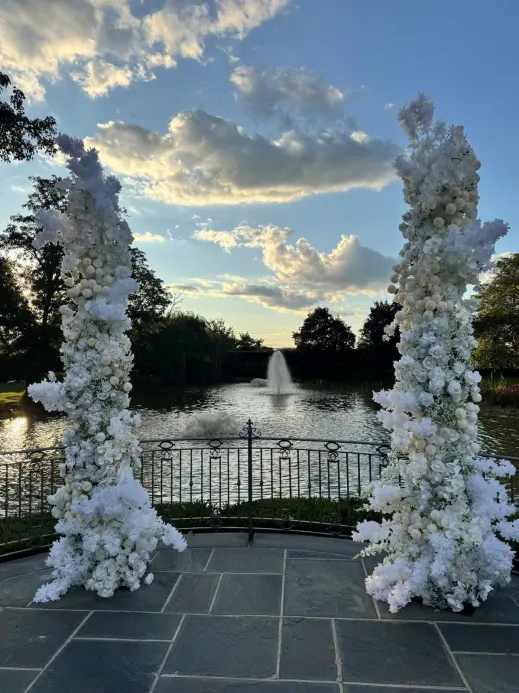
We figured this out early and never forgot it. Ceremony florals at LIC waterfront venues get designed around the view, not in front of it. Low-profile altar pieces positioned to the sides. Arches with deliberately open centers so the skyline reads through the structure. If the couple wants a full-coverage arch, we position it so the densest floral section frames the top and sides while leaving a clear vertical window in the center where the buildings show through.
Sounds like a small adjustment. In practice it completely changes how the ceremony photographs. The bride walks toward her partner AND the Manhattan skyline simultaneously in every wide shot. The photographer captures both the floral work and the city in a single frame without having to choose one or the other. That layering is what makes LIC ceremony photos look cinematic and it’s something we plan for intentionally.
The rooftop at Ravel is probably the single most-photographed wedding ceremony spot in Queens. The terrace faces the Manhattan skyline dead on, the elevation is high enough to clear the surrounding buildings, and the infinity pool edge creates a foreground element that photographers go absolutely nuts over.
We’ve done the Ravel rooftop enough times to have a playbook that accounts for its specific conditions. Wind is constant up there. Not dramatic gust-level wind most days, but a steady river breeze that never fully quits. Ceremony structures need weighted bases. Tall arrangements on the cocktail tables get anchored. Any loose petal work on the ceremony aisle gets pinned down with clear adhesive dots at the edges or it migrates across the terrace during the processional.
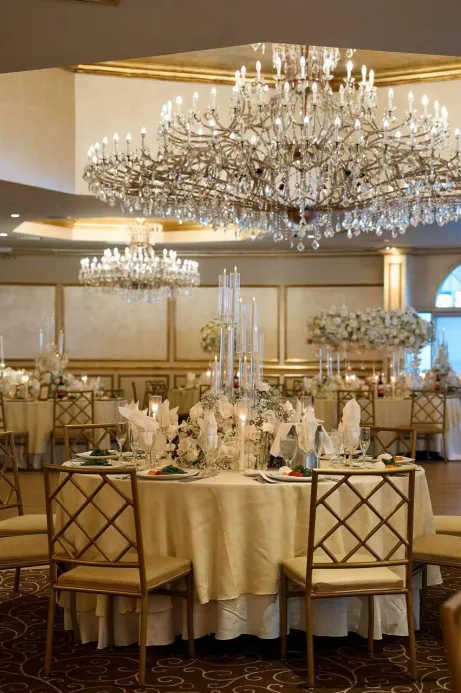
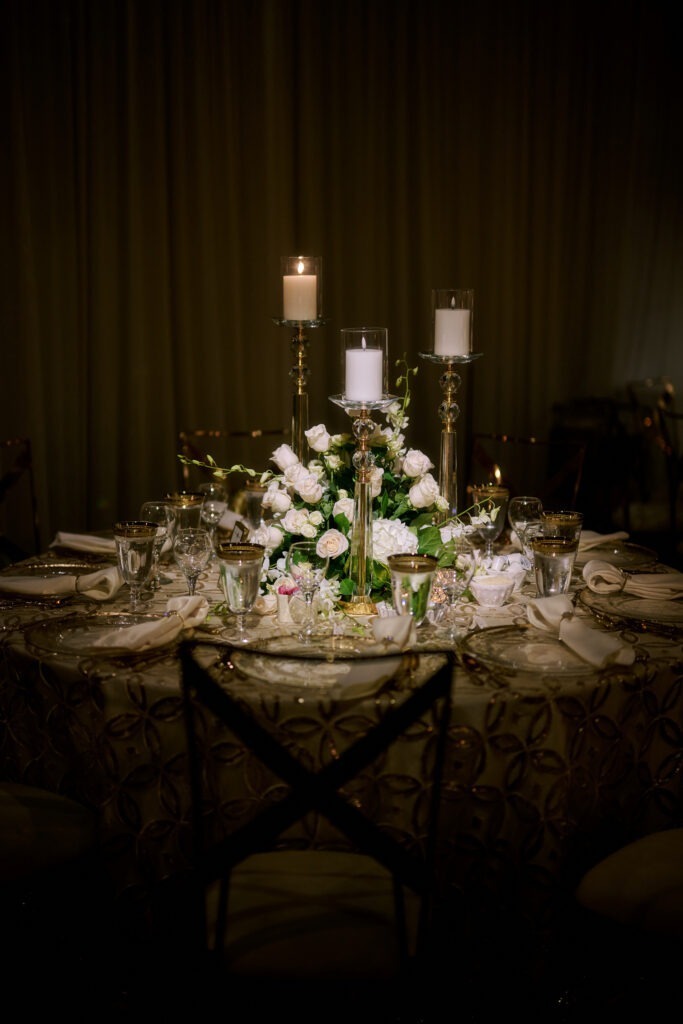
Inside for the reception, the event space is modern and clean – polished surfaces, contemporary furniture, neutral walls. Floral design in this room runs sleek. Sculptural centerpieces in matte vessels. Monochromatic palettes or very tight color stories that complement the modern interior. We’ve tried garden-style arrangements at Ravel and they don’t land the same way they do at a brownstone wedding. The building’s own design language is contemporary and the flowers need to speak the same dialect.
The transition from rooftop ceremony to indoor reception is tight logistically. Guests move downstairs while our crew simultaneously relocates ceremony pieces to their reception positions. We’ve choreographed this transition at Ravel enough times that our team can execute the whole move in under twenty minutes. Arch comes apart, altar urns travel down the elevator, aisle pieces redistribute onto cocktail tables. By the time guests walk into the reception room, everything is placed and styled. Nobody sees the hustle.
Modern glass box on the water. Two stories of windows. A terrace that cantilevers over the East River with unobstructed views north toward the Queensboro Bridge and south toward the Williamsburg Bridge. The Bordone is the venue that architects book for their own weddings. The building itself is the design statement and everything else in the room – furniture, lighting, flowers – exists in conversation with that architecture.
We’ve done garden-romantic work at The Bordone and we’ve done hyper-modern minimal work. Both can succeed but each requires a different level of intentionality. The modern approach is easier because it mirrors what the building already communicates – clean lines, restrained palette, geometric shapes. Put an architectural orchid arrangement in a tall clear cylinder on a glass tabletop at The Bordone and it looks like the building designed itself.
The romantic garden approach takes more layering. Soft fabric draping to warm the hard surfaces. Candles everywhere to counteract the coolness of all that glass and steel. Lush arrangements with lots of textural greenery to introduce organic shapes into a space that’s all right angles and flat planes. When a couple pulls this off at The Bordone – and we’ve helped several do exactly that – the contrast between the sleek architecture and the wild, abundant florals creates tension that photographs incredibly well. Cold building, warm flowers. The push-pull gives the room visual energy it wouldn’t have if everything matched.
Ravel Hotel, The Bordone, Metropolitan Building, The Foundry space, various rooftop locations along the waterfront. We know the rooms, the coordinators, and the wind patterns.
Every LIC ceremony we design treats the Manhattan skyline as a co-star, not an obstacle. Florals frame the view rather than competing with it.
A former factory turned event space that predates the LIC wedding boom by years. The Metropolitan Building was hosting weddings when most of the neighborhood was still zoned industrial, and it earned its reputation the old-fashioned way – gorgeous light, beautiful bones, and a landlord who understood that creative people would find the space if you just left it alone.
The window wall facing Manhattan is the money shot. Late afternoon light pours through that glass and turns the whole room golden for about ninety minutes. Every photographer working an MB wedding knows exactly when that window hits peak glow and they schedule couple portraits accordingly. Our job is making sure the floral elements near that window look their best during that specific light window.
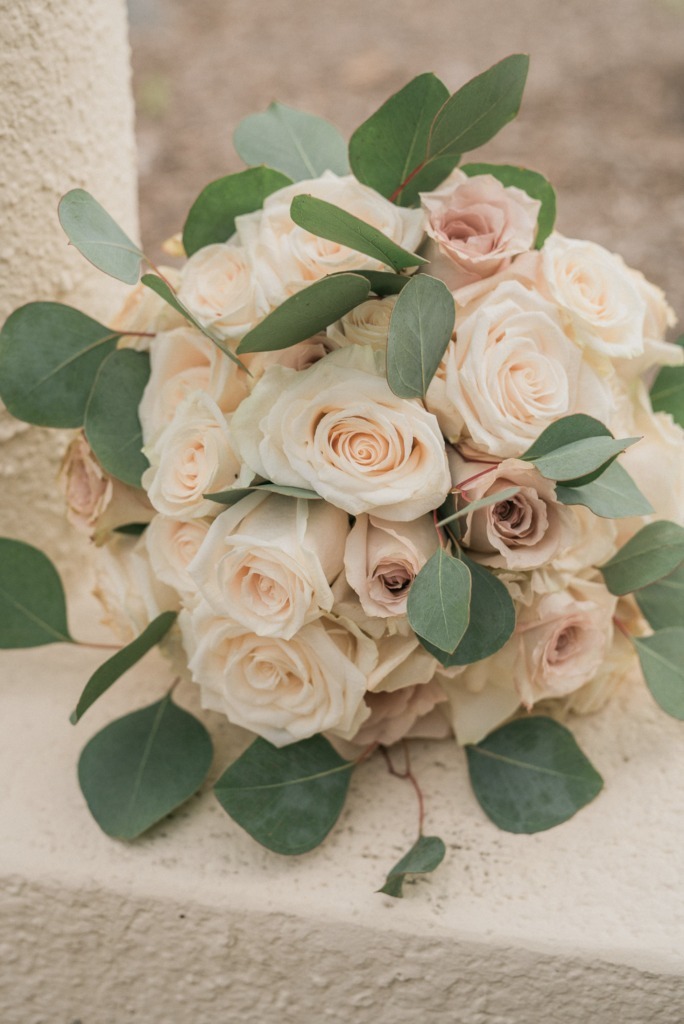
Warm-toned arrangements near the west-facing glass. That’s the rule. Cool tones – lavender, dusty blue, silver foliage – wash out when the golden hour light floods in and everything skews amber. Peach, coral, terracotta, deep blush, warm white – these tones glow under that light instead of fighting it. We’ve had brides who wanted a lavender palette at Metropolitan Building and we steered them gently toward warm mauve instead. Same color family. Dramatically better performance in that room at 5 PM in October.
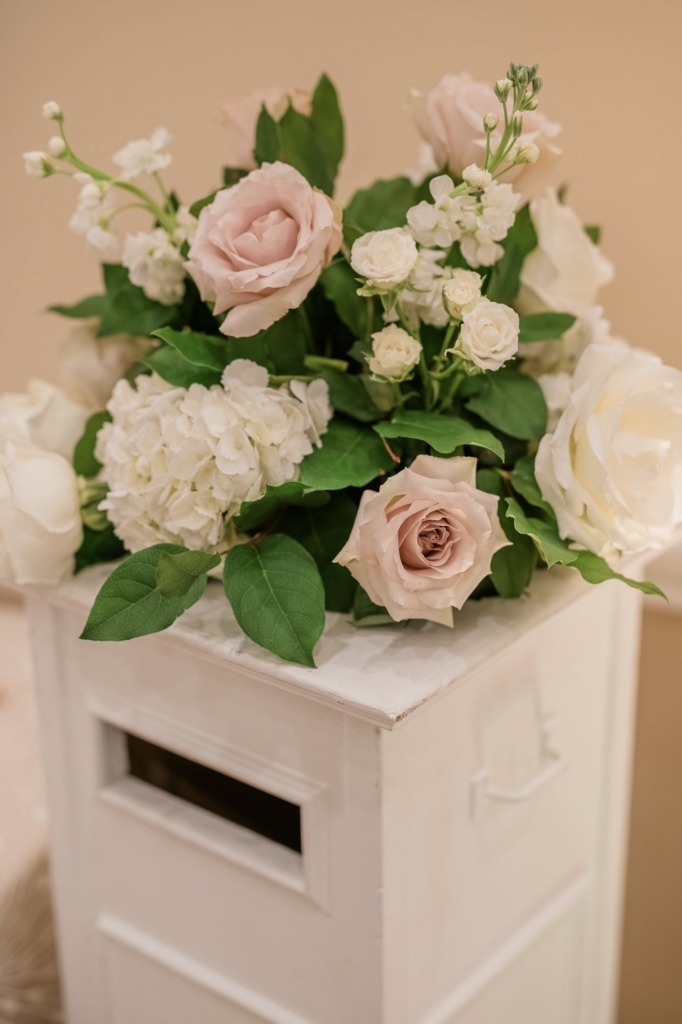
The industrial character of the building – old machinery, exposed brick, iron fixtures – pairs well with arrangements that have a collected, slightly undone quality. Loose garden-style bouquets. Trailing greenery. Vessels with texture and age to them. A polished crystal centerpiece at Metropolitan Building feels transplanted from a different venue. A hammered brass urn with garden roses and clematis vine spilling over the edge feels like it grew out of the brick wall behind it.
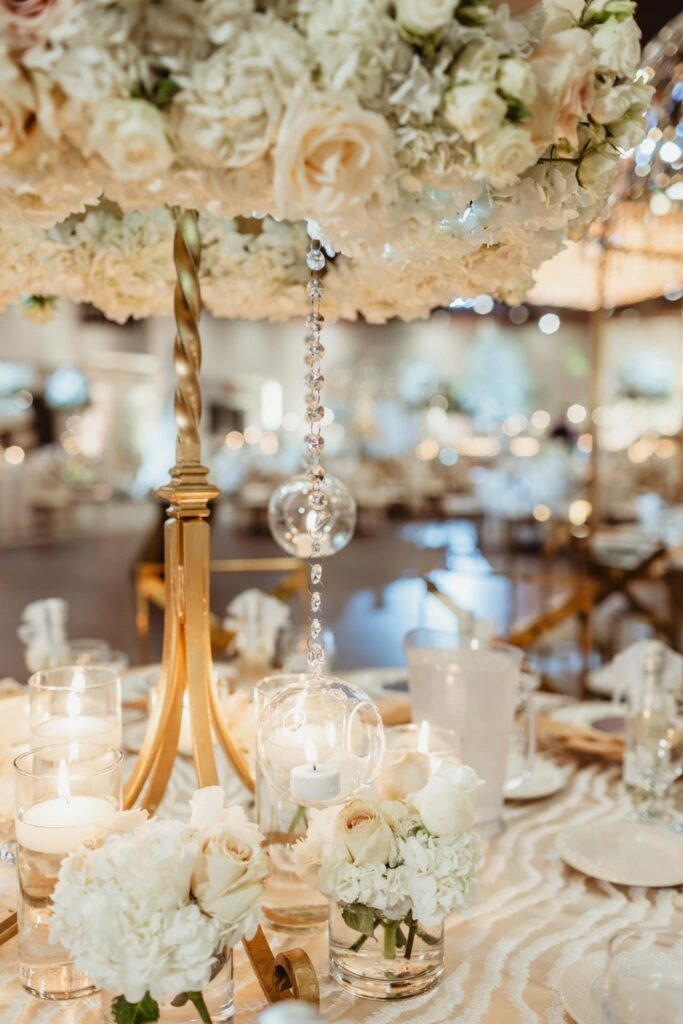
New event spaces keep opening along the LIC waterfront as the neighborhood develops. Each construction cycle adds another rooftop bar or ground-floor event space to the roster. Some of these newer venues are still establishing their event programs, which means couples booking them are sometimes the first or second wedding the space has ever hosted.
That’s actually fine by us. Newer venues are often more flexible about setup timing, vendor access, and creative freedom because they haven’t calcified into rigid policies yet. A venue that’s hosted 500 weddings has a system. A venue on its third wedding is still figuring out what works and they’re more open to collaboration. We’ve helped a couple of newer LIC venues develop their floral vendor guidelines based on what we learned during our first few events there. Ceiling rigging points that we identified during installation became part of the venue’s official capabilities list for future couples.
The risk with newer spaces is unknown quantities. How does the AC actually perform during a July reception with 150 bodies in the room? Does the freight elevator run on weekends or does a building engineer need to be called in? Are there noise restrictions from residential tenants above the event floor? We ask these questions during venue walkthroughs and if the venue doesn’t have answers yet, we build contingency time into our setup schedule.
LIC’s biggest selling point for outdoor ceremonies is the East River waterfront. Gantry Plaza State Park. Hunter’s Point South Park. Various venue terraces and docks along the water. The combination of river, skyline, and open sky creates ceremony backdrops that look like they were composited in Photoshop except they’re real and they’re fifteen minutes from Midtown by subway.
Waterfront wind is the constant challenge. The East River corridor funnels air movement and the intensity varies dramatically by time of day and season. Morning ceremonies tend to be calmer. Late afternoon picks up as the land-water temperature differential increases. We’ve monitored wind conditions at LIC waterfront locations across enough seasons to have a working sense of what to expect during different months, but weather always has the final say and we plan for the worst case regardless.
Every outdoor stem selection for LIC waterfront work goes through a wind-resistance filter. Flowers with strong stems that don’t snap or bend – lisianthus, stock, certain rose varieties. Greenery that holds its shape in sustained breeze – olive branch, magnolia leaf, Italian ruscus. Delicate wisps of astilbe or jasmine vine that look gorgeous in still air but shred in fifteen-knot gusts? Those stay on the truck as backup and only come out if the wind cooperates. Which sometimes it does. We just don’t bet the ceremony on it.
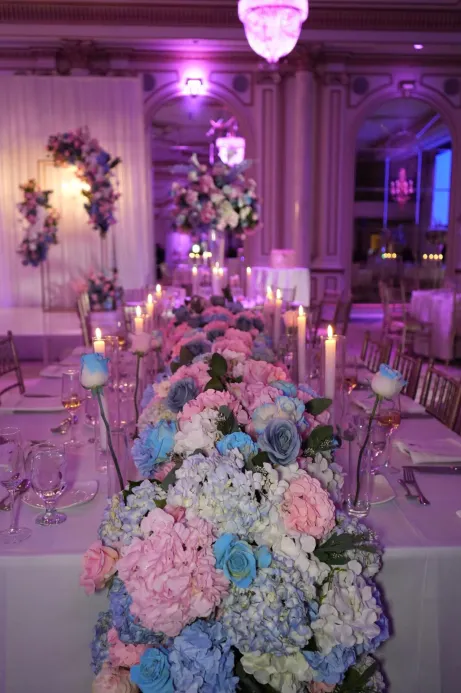
Space at a sane price. That’s the honest answer. A 200-person wedding in a waterfront venue with skyline views in LIC costs a fraction of what a comparable Manhattan venue charges. Couples who save on the venue frequently redirect that money toward bigger floral budgets, and we see the results in our LIC proposals. More elaborate ceremony structures. Larger installations. Denser centerpiece work. Full garland runners down long tables instead of individual arrangements.
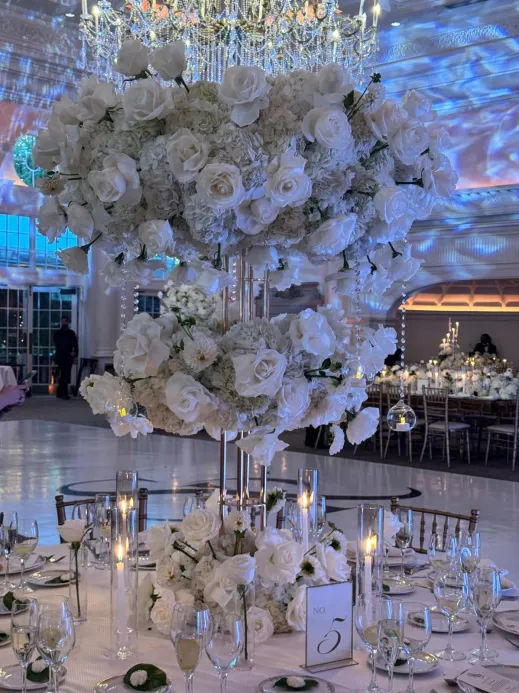
The venues are also physically larger on average than their Manhattan equivalents, which means more room for floral installations to breathe and be appreciated from a distance. A hanging arrangement over a dance floor at a LIC venue with 16-foot ceilings and an open floor plan reads as a dramatic statement piece. The same installation in a Manhattan hotel ballroom with 10-foot ceilings and structural columns partially blocking the view reads as cramped.
We love designing in LIC because the physical constraints are looser. More ceiling height to work with. More floor space between tables. More wall area for backdrop installations. More terrace square footage for outdoor ceremony layouts. Every dimension is more generous and that generosity shows up in the finished product.
The Queensboro Bridge connects our Midtown studio to LIC directly. Saturday mornings before 9 AM the crossing takes ten minutes, maybe twelve. By mid-morning add another ten for the backup that forms on the Manhattan side around the bridge entrance on 59th Street. The Midtown Tunnel is a backup option that drops us into LIC from a different angle and avoids the bridge entirely at the cost of a toll.
Transit time to LIC is shorter than our Brooklyn deliveries and comparable to most Manhattan runs. The neighborhood feels close because it is close. We can do a morning venue check and be back at the studio in forty-five minutes total, which makes last-minute coordination and supplemental deliveries genuinely practical rather than theoretical.
Parking and loading in LIC is dramatically easier than Manhattan. Most venues have dedicated loading areas. Street parking exists and you can actually find it before noon on a Saturday. The absence of midtown congestion means we can run multiple trips between the van and the venue entrance without a traffic cop threatening to tow us. Small logistical luxuries that add up to a more relaxed setup experience for our crew and better results on the final arrangements because nobody was rushing through installation while watching the clock on a loading zone.
Spring hits LIC hard. Cherry blossoms along the waterfront parks. The Manhattan skyline sharpening up as winter haze clears. Outdoor ceremony season opening up on the terraces. We lean into seasonal abundance – tulips, ranunculus, hyacinth, sweet peas, branches with fresh buds – because the market overflows with these stems in April and May and they’re affordable enough to use generously.
Summer is the peak booking season for LIC venues because everybody wants that outdoor sunset ceremony. We get it. Hard to argue with. But July and August bring genuine heat stress to flowers sitting on an exposed terrace for two hours before the bride walks out. We deliver late, we hydrate obsessively, and we keep backup stems in a cooler onsite for last-minute swaps if the sun cooks something faster than expected. One trick we’ve refined over multiple LIC summers – a light misting of the ceremony arrangements about thirty minutes before the processional. Quick spray, invisible to guests, buys the flowers another hour of freshness.
Fall at LIC is perfection. Golden light hitting the skyline. Comfortable temperatures that keep flowers happy all day. A seasonal palette of dahlias, garden roses in sunset tones, ornamental grasses, and autumn branches that looks stunning against the industrial architecture and the warm afternoon light bouncing off the East River. If someone asked us to pick the ideal season for an LIC wedding, October comes out of our mouths before they finish the sentence.
Winter narrows the outdoor options but the indoor spaces compensate. Floor-to-ceiling windows still give you the skyline view even when the terrace is closed. Dense, moody arrangements in deep winter tones – burgundy, forest green, plum, midnight blue – look incredible against the dark river and the city lights after sunset. Winter LIC weddings at venues like The Bordone or Ravel feel like private parties suspended above the city. The glass walls become screens showing Manhattan’s night skyline and the warm, candlelit room inside feels like a cocoon.
LIC couples tend to get more floral square footage per dollar than Manhattan couples because the venues are larger and the couples often reallocate venue savings toward décor. Our per-stem pricing doesn’t change based on borough – a garden rose costs what it costs regardless of which side of the river it ends up on. What changes is the scope.
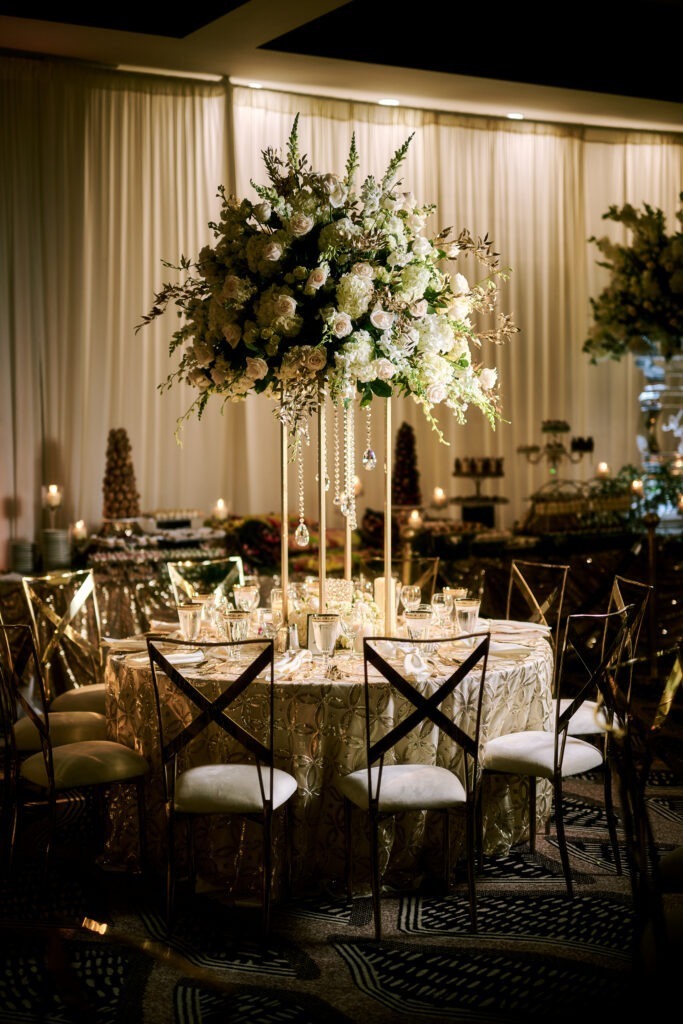
Bigger rooms mean more tables, which means more centerpieces. Taller ceilings invite installations that wouldn’t fit in a standard-height venue. Expansive terraces create ceremony footprints with longer aisles and wider altar areas that need proportionally more floral coverage. The line items multiply not because anything is more expensive individually but because the space accommodates – and usually demands – more volume.
We present LIC proposals with the same itemized breakdown we use everywhere. Per-table centerpiece costs, ceremony piece pricing, personal flower rates, installation quotes with materials and labor separated. You control the scope by choosing which elements to invest in and which to scale back. Want to put most of the budget into a massive ceremony structure against the skyline and keep the dinner tables simple? We’ll model that out. Prefer even distribution across all the floral categories? That works too. The proposal is a menu, not a mandate.
We’ve designed more LIC waterfront ceremonies than we can count and every single one was built around framing that Manhattan view, not hiding it behind flowers.
River breeze, summer sun, temperature swings between outdoor ceremony and indoor reception. Every LIC floral element is selected and conditioned for the actual conditions on that terrace.
The Queensboro Bridge puts us practically next door. Quick venue visits, fast supplemental deliveries, and setup timing that doesn’t burn hours on transit.
Large-format LIC weddings with 200-plus guests, 25-plus centerpieces, ceremony structures, and suspended installations. We staff and source for the scale these venues demand.
Call us at (929) 833-8990 or fill out the form below. Tell us which LIC venue you’re working with – or if you’re still deciding between a few – along with your wedding date, guest count, and a rough sense of what you’re imagining florally. We’ll get a conversation started and put together a proposal shaped around that specific room and that specific skyline.