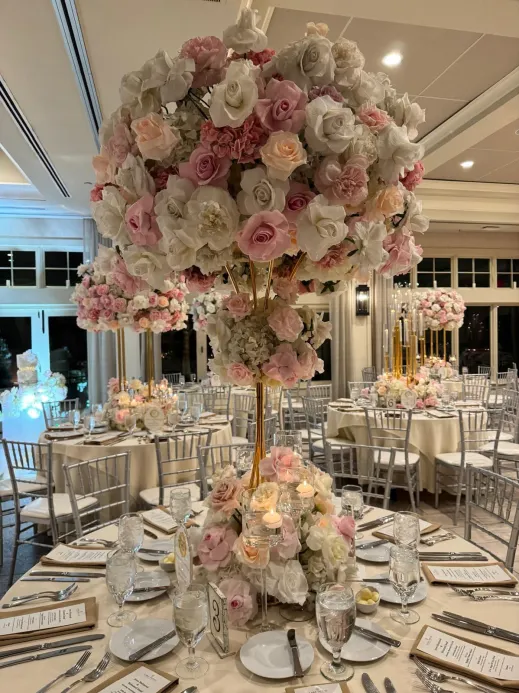
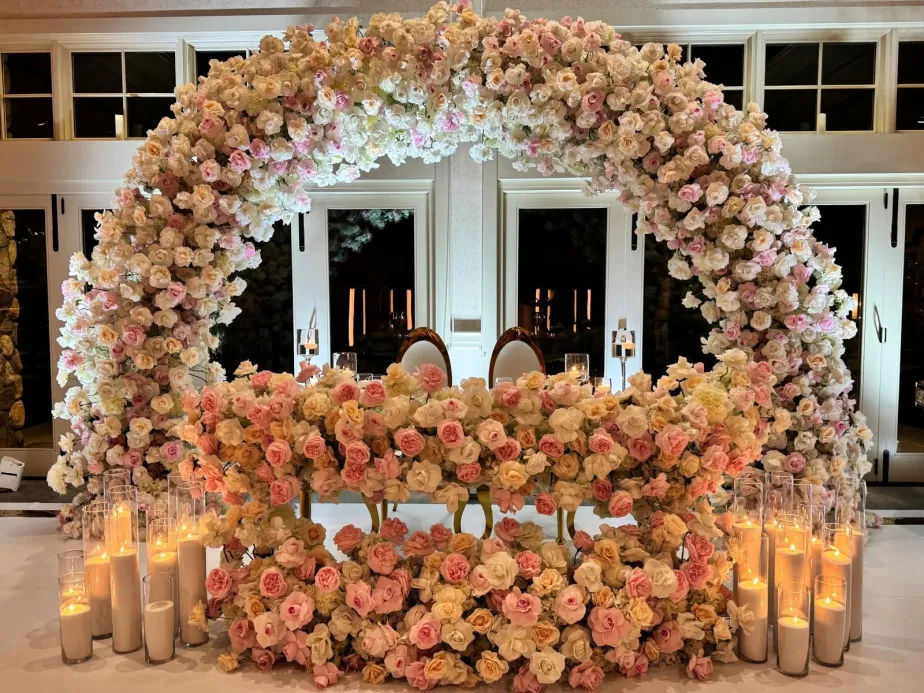
Tribeca is where Wall Street money moves into converted loft spaces with 15-foot ceilings and pretends it’s been living downtown all along. Cobblestone streets named after old Dutch merchants. Former industrial buildings turned into $8 million apartments. Robert De Niro’s restaurant empire anchoring the neighborhood’s dining scene. And weddings – lots of them – happening inside raw event spaces, private rooftops, and restaurant back rooms where the prix fixe alone costs more than some couples spend on their entire reception. We’ve been crossing Canal Street with vans full of flowers for over a decade now, and Tribeca keeps attracting couples who want their wedding to feel like it happened in the most grown-up neighborhood in Manhattan. Because it did.
Nobody in Tribeca is trying to impress you. That’s the whole trick. The couple wearing matching Brunello Cuccinelli at their rehearsal dinner. The venue that looks like a casual loft until you notice the custom steel staircase and the Boffi kitchen. The floral design that seems relaxed and unfussy until you look closely and realize every stem was hand-selected from a specific Japanese grower.
This is the hardest look to execute in wedding florals. The “I didn’t try too hard” effect that actually requires more skill and better materials than a maximalist approach. At a ballroom wedding on the Upper East Side, abundance covers a multitude of sins – pack enough roses into a silver urn and the sheer volume does most of the work. In Tribeca, you might have eight stems in a ceramic vessel on a walnut table and each one of those stems needs to be perfect because there’s nowhere for a mediocre bloom to hide.
Our studio got good at this through years of Tribeca work specifically. Learning to edit. Learning that removing a stem sometimes makes the arrangement stronger. Learning which varieties have the kind of individual beauty that holds up under scrutiny when they’re not buried inside a crowd of fifty other flowers.
The rooftop scene down here is different from what you get in Chelsea or Williamsburg. Less scene-y. More private. A lot of Tribeca rooftops are attached to residential buildings or private clubs rather than hotels and restaurants, which means the guest experience feels exclusive rather than commercial.
Tribeca 360 on Broadway is the big public-facing option and its panoramic views are genuinely jaw-dropping. You’re standing on top of a building looking at the Hudson River, the Freedom Tower, the Brooklyn Bridge, and Lower Manhattan’s skyline all at once. The ceremony happens outdoors on the terrace and the reception moves inside to the loft space below. We’ve designed that transition multiple times – outdoor ceremony florals that get relocated downstairs during cocktail hour while guests are on another floor.
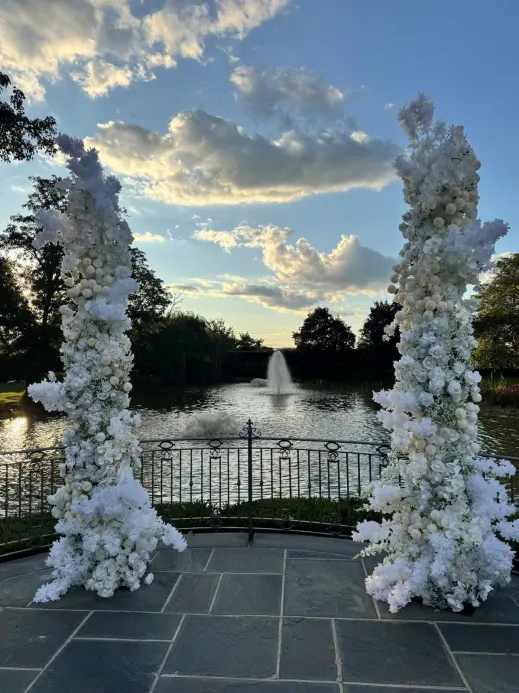
Wind at Tribeca 360 is real. The building catches river gusts and anything lightweight on the terrace is at risk. Our ceremony structures there always get weighted bases and our variety selection skews toward blooms with stiff stems and compact petal structures that can handle sustained breeze without shredding. Ranunculus at Tribeca 360 holds up. Garden roses depend on how open they are. Anything on a tall, thin stem – anemones, cosmos, poppies on long stems – is rolling the dice.
Private residential rooftops in Tribeca are smaller and more sheltered but come with their own complications. Weight restrictions on the roof surface. Building management rules about noise levels, guest counts, and vendor access hours. HOA boards that need to approve the event and sometimes impose conditions on setup and breakdown timing. We’ve worked within all of these constraints and honestly the more restrictive the access, the more intimate and memorable the event tends to feel.
Wind-rated structures, weighted bases, heat-tolerant varieties, and a rain plan designed before we finalize any outdoor Tribeca ceremony concept.
Residential rooftop rules, building management requirements, service elevator schedules, noise restrictions – we coordinate with your building contact weeks ahead so the day runs without friction.
Tribeca lofts share some DNA with their SoHo cousins upstairs but the feel is moodier. SoHo lofts tend toward white walls and bright light. Tribeca lofts lean darker. Exposed brick that’s been left raw rather than whitewashed. Heavier timber ceiling beams. Wider plank floors with a century of patina on them. The rooms down here have weight to them.
That weight changes the floral playbook. Delicate, pastel-heavy arrangements that work beautifully in a sun-drenched SoHo space can look washed out and tentative inside a Tribeca loft with dark brick and warm-toned wood. Deeper saturation plays better. Burgundy, plum, forest green, terracotta, rust. Colors with enough pigment density to register against a backdrop that isn’t helping them out with reflected light the way a white wall does.
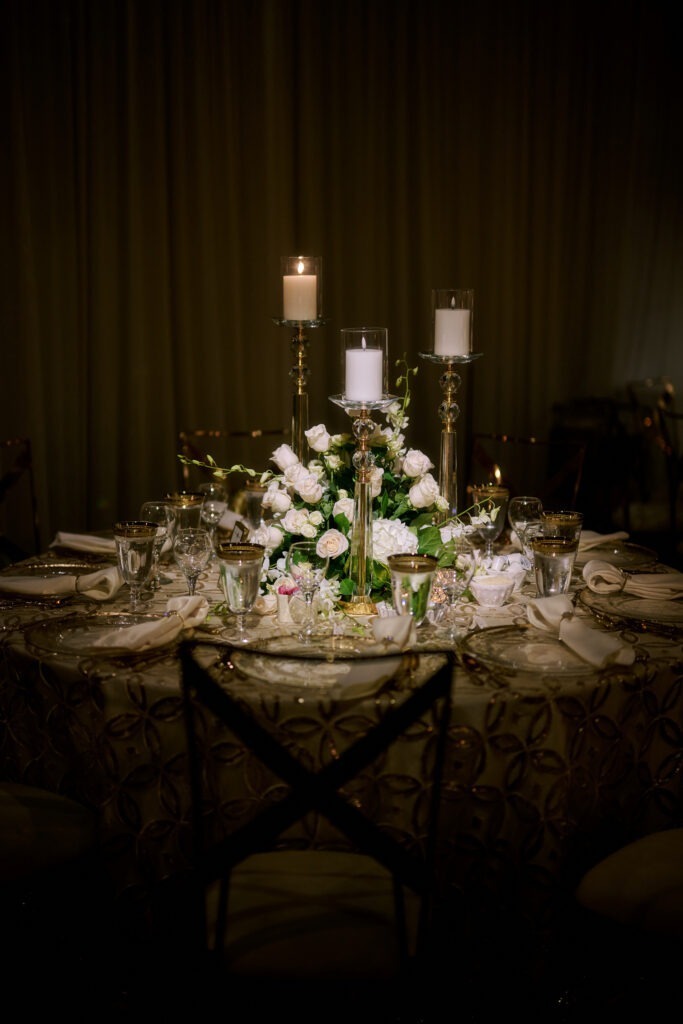
Vessel choice matters more down here too. Clear glass on a dark wood table can look fragile and out of place. Matte ceramic in earth tones, aged brass, hammered copper, dark stoneware – these materials sit naturally on a Tribeca surface the way clear glass sits naturally on a white SoHo gallery pedestal. The container is part of the arrangement and we select it based on what the table and the room are already telling us.
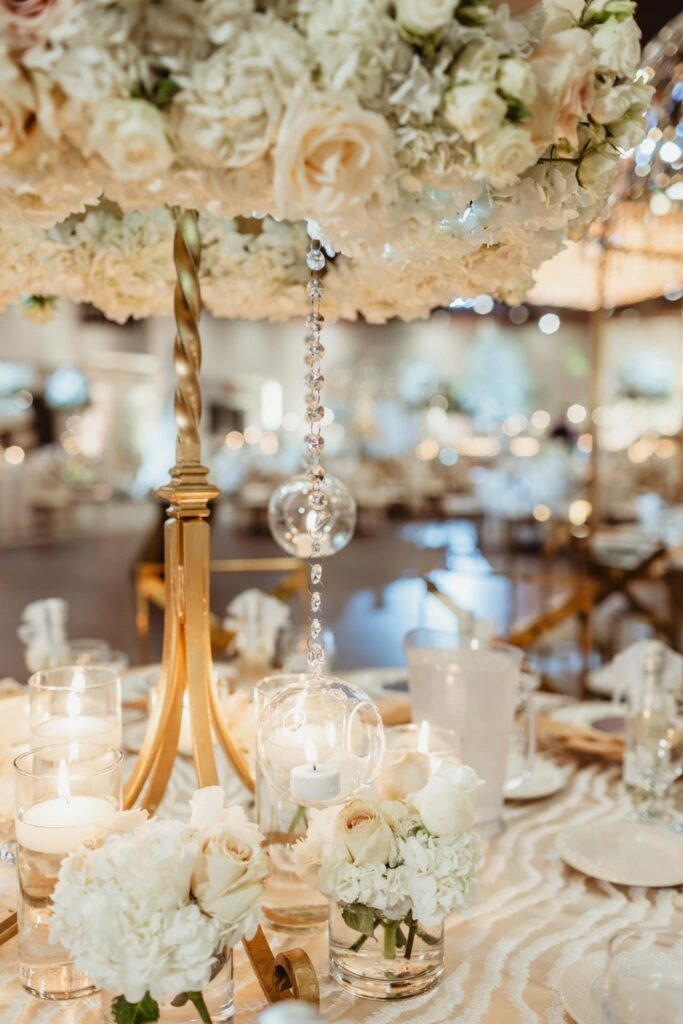
If you’ve seen a celebrity wedding photographed in Tribeca in the last ten years, decent odds it happened at the Greenwich Hotel. The building is Robert De Niro’s project and the interiors reflect a collected, global aesthetic – Moroccan tile, reclaimed wood, Japanese-inspired courtyard, lantern lighting in the public spaces. Nothing matches in the conventional sense. Everything belongs together in a way that feels deeply considered.
Flowers at the Greenwich need to match that collected sensibility. Tight, formal arrangements in identical vessels lined up symmetrically across the tables? Wrong building. A curated mix of vessels in different materials – ceramic, glass, hammered metal – each holding a slightly different variation of the same palette? Now you’re speaking the hotel’s language.
The courtyard at the Greenwich is one of the prettiest ceremony spots in all of Lower Manhattan. Covered by a glass roof designed by a Japanese architect, surrounded by greenery and stone. Intimate capacity. The kind of space where twenty-five guests feels like the right number because adding more would dilute the atmosphere. We keep ceremony florals restrained here. A pair of low arrangements flanking the couple. Maybe a small piece on the ledge behind the officiant. The courtyard provides its own beauty and heavy-handed florals would break the spell rather than enhance it.
Locanda Verde. The Odeon. Frenchette. Bâtard. Tribeca’s restaurant scene punches absurdly hard for a neighborhood this small, and buyout dinners at these spots are some of the most elegant wedding receptions happening anywhere in the city.
Each restaurant has its own interior personality that we study before proposing anything. Locanda Verde runs warm and rustic-Italian – terra cotta, wood, leather, amber lighting. Floral design there should feel like something you’d find on a farmhouse table in Tuscany. Loosely gathered stems in a stoneware pitcher. Herbs mixed in with the blooms because the kitchen smells like them already. Nothing precious.
The Odeon is a different mood entirely. That 1980s art-world energy. The neon sign. The diner-meets-bistro interior that’s been cool for forty years without ever trying to be. Flowers at The Odeon should feel like they were grabbed from a French flower market on the walk to the restaurant – a casual armful dropped into a simple vessel. Overthinking the arrangements in this room works against the venue’s effortless character.
Frenchette is the newest addition to the Tribeca restaurant wedding circuit and the interior is sleek enough that floral work needs to be edited and precise. Monochromatic palettes. Sculptural shapes. A single variety featured across all the tables rather than a mixed garden look. Frenchette already spent a fortune on interior design. Respecting that investment with complementary rather than competing florals is the move every time.
The Tribeca Film Center hosts private events in a space that channels the neighborhood’s creative identity – cinema, storytelling, that particular brand of downtown cultural cachet. Weddings here draw a crowd that’s plugged into the arts. Your floral design is being evaluated by people who notice composition, color theory, and negative space because they work in visual fields professionally.
We respond by leaning editorial. Strong point of view in the arrangements. A limited palette executed with precision rather than a wide palette executed with abundance. Structural elements – branches, dried grasses, architectural foliage – that give the eye something interesting to parse beyond just “pretty flowers.” This is the kind of room where an unusual vessel choice or an unexpected bloom combination gets noticed and appreciated because the audience is paying that caliber of attention.
Here’s something specific to this neighborhood that affects floral budgeting. Tribeca wedding guest counts tend to be moderate – 75 to 150 is the sweet spot for most venues down here. But the spaces themselves are often large. A loft that seats 100 comfortably still has the same 3,000 square feet of floor space and 14-foot ceilings as one designed for 200.
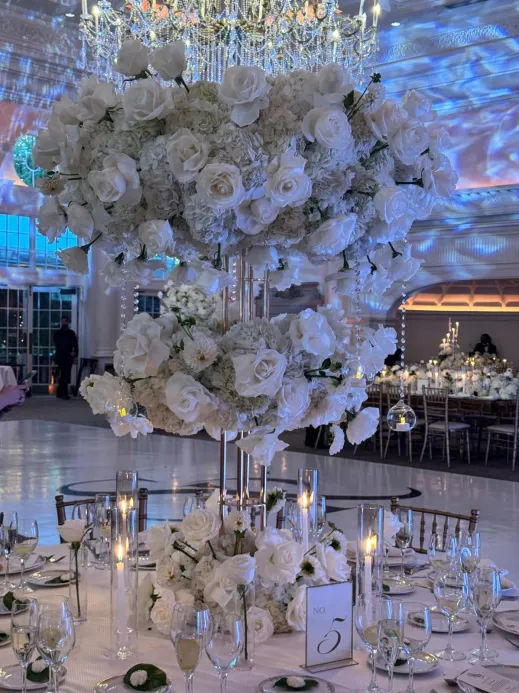
Fewer tables in a big room means more empty space visible between them. And empty space in a high-ceiling loft reads as underdressed unless you fill the vertical plane with something. Hanging installations, tall branch arrangements, a ceremony structure that stays in the room through the reception as a visual anchor. These elements cost money but they’re doing necessary architectural work that a smaller room with lower ceilings wouldn’t require.
We flag this during consultation for every Tribeca loft wedding. The per-guest floral budget that works at a packed Brooklyn restaurant buyout will leave a Tribeca loft looking bare. Not because the flowers are more expensive down here – they aren’t – but because the room-to-guest ratio demands more design to fill the visual field. Better to have that conversation early and plan accordingly than to discover the problem during setup when the only solution is improvisation.
Some of the most extraordinary residential real estate in Manhattan sits in Tribeca. Former industrial buildings converted into full-floor apartments and multi-story townhouses with private courtyards, landscaped terraces, and entertaining spaces built for this exact kind of occasion.
Private home weddings in Tribeca are our most bespoke projects. Every room is different. Every floor plan is unique. The couple’s own furniture, art collection, and décor become part of the visual environment and the flowers need to feel like they belong in this specific person’s home, not like a generic event florist came through and imposed a standard wedding template on top of someone’s living room.
We do a thorough walkthrough of the residence before designing anything. Room by room. Noting the art on the walls, the color of the upholstery, the finish on the kitchen counters, the view from each window, the way light moves through the space at different hours. All of this informs the floral plan. A couple whose home is minimal and Scandinavian gets a different proposal than a couple whose loft is filled with collected antiques and maximalist textiles. The flowers should look like the homeowner chose them, not like we did.
Getting to Tribeca from our Midtown studio takes us straight down the West Side Highway. Saturday mornings before 8 AM the route runs about twenty minutes. Later in the morning, add ten. Construction detours along the highway reroute us onto surface streets periodically and we monitor DOT alerts the night before every Tribeca delivery to catch any surprises.
Street-level access in Tribeca is generally decent by Manhattan standards. Wider streets than Midtown. Less congestion than SoHo on a Saturday. Some of the bigger loft buildings have proper loading bays accessible from side streets. Restaurant deliveries typically go through a service entrance or a kitchen door on the back side of the building.
The cobblestone streets that make Tribeca so photogenic are genuinely annoying to drive on with a loaded van. Not dangerous, just bumpy enough to jostle tall arrangements if they’re not strapped properly. We double-secure everything for Tribeca runs and pad the taller pieces with extra cushioning. A centerpiece that was perfectly upright when we left the studio should still be perfectly upright after fifteen blocks of cobblestone vibration. It always is because we pack like it won’t be.
Spring weddings in Tribeca benefit from the neighborhood’s surprising amount of street-level greenery. The small parks and tree-lined blocks below Canal are some of the first to bloom as temperatures warm. We pull seasonal references into the arrangements – budding branches, early tulips, fresh herbs – that connect the indoor floral design to what guests saw walking from the subway to the venue.
Summer brings the rooftop season into full swing. Long evenings on the terrace. Sunset ceremonies. Cocktail hours that stretch until 9 PM because the light won’t quit. Heat-resistant varieties are mandatory for anything sitting outside. Inside the loft spaces, AC keeps conditions manageable but we still bias toward sturdy stems for summer Tribeca work because the load-in involves carrying arrangements through outdoor heat before they reach the climate-controlled event space.
Fall is Tribeca’s best season for floral work. Moderate temperatures preserve blooms longer. The rich autumn palette – amber, mahogany, burnt sienna, chocolate – sits beautifully against the dark brick and warm wood tones that dominate Tribeca interiors. Dahlias are peaking at the market in September and October and we load up on them for fall weddings down here because their visual density matches the neighborhood’s weight.
Winter strips the trees bare and the neighborhood takes on a quieter, more introspective character. Restaurant receptions feel cozier. Loft spaces lit with candles and warm spots feel like private refuges against the cold streets outside. Dense, jewel-toned arrangements with lots of evergreen texture, berry accents, and moody foliage. The holiday season adds its own layer of atmosphere to Tribeca venues and we coordinate with whatever seasonal décor the space already has up rather than fighting it.
Two words. Taste level. Tribeca couples live surrounded by considered design in their homes, their restaurants, their neighborhood streets. They can spot the difference between a florist who placed stems thoughtfully and one who filled a vase and moved on. That distinction matters to them and it matters to us.
Our studio’s Tribeca work skews more editorial and more restrained than our work in most other neighborhoods. Fewer stems per arrangement on average, but each stem selected with more scrutiny. Simpler vessel choices, but vessels that were specifically chosen to match the table surface they’re sitting on. Less decorative complexity, but more compositional intention behind every piece. This is the neighborhood where our editing skills get the biggest workout and where the results feel the most refined.
Tribeca 360, Greenwich Hotel, Tribeca Rooftop, private lofts, gallery spaces, restaurant buyouts at a dozen neighborhood spots. We’ve worked the neighborhood thoroughly and keep adding venues to our experience list.
Full-home wedding design including room-by-room floral planning, integration with existing décor and art, and coordination with building management for access and restrictions.
Edited, intentional, compositionally precise. Tribeca asks for a more refined approach and our studio delivers it because we’ve spent years understanding what this neighborhood values.
High-profile guests, prominent families, residential settings where discretion matters. We work cleanly, we stay out of the way, and we don’t post anything without permission.
Call us at (929) 833-8990 or fill out the form below. Tell us your Tribeca venue – loft, rooftop, restaurant, private home, or anywhere else below Canal – along with your wedding date and a rough sense of the visual direction you’re pursuing. We’ll get back to you within a day and start shaping a proposal around the specific room where your celebration is happening.